
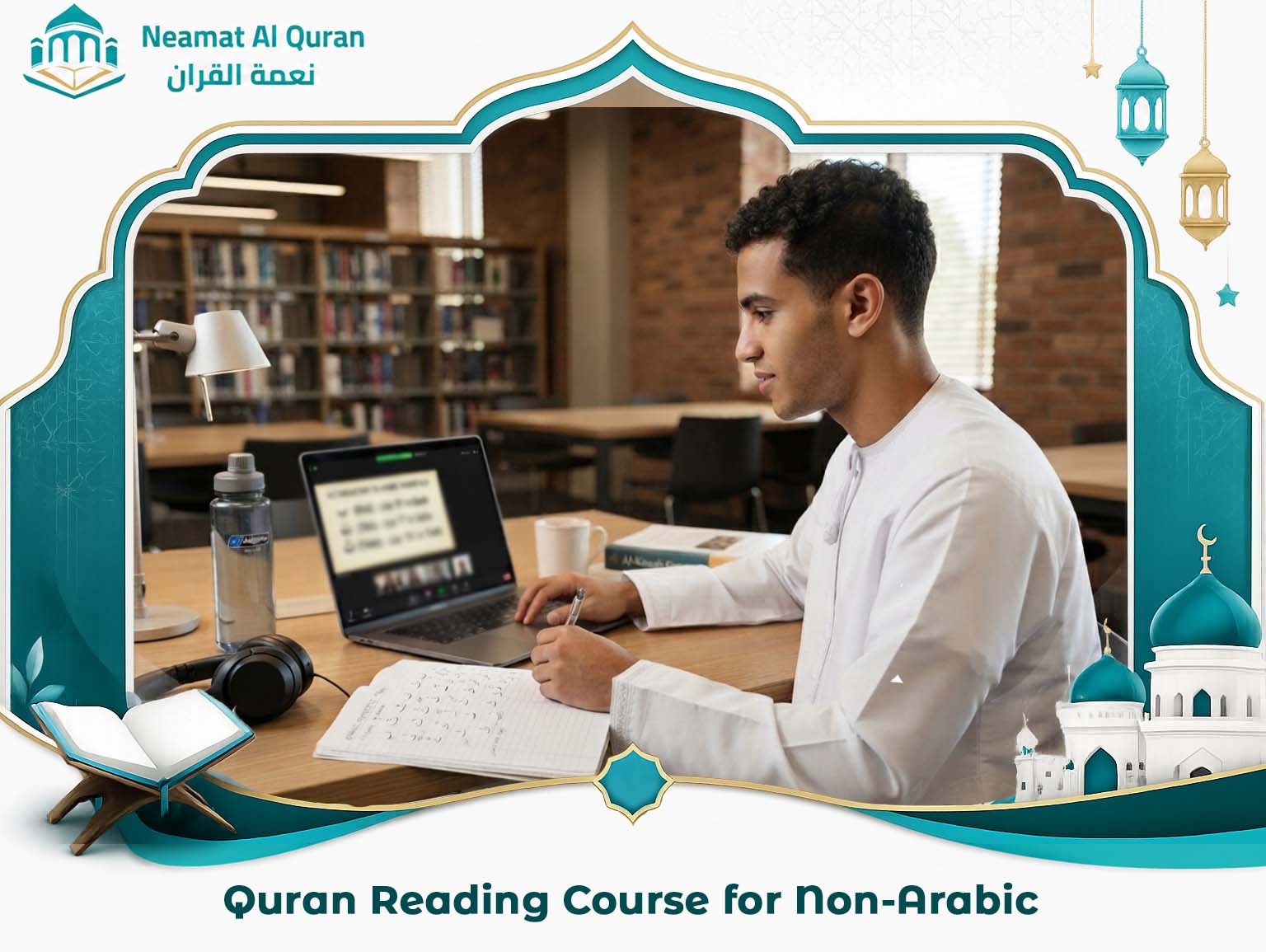
Quran reading course for non-Arabic speakers provides a practical starting point for Muslims who want to read the Quran correctly but did not grow up speaking Arabic. Learning to read the Quran can seem challenging at first because Arabic has a different alphabet, unfamiliar sounds, and specific pronunciation rules. However, with structured lessons, regular practice, and patient guidance, beginners can gradually develop the skills needed to read Quranic verses with greater confidence.
At Neamat Al Quran Academy, a Quran reading course for non-Arabic speakers can be adapted to suit different learning levels, ages, and individual needs. Complete beginners can start with the Arabic alphabet and basic vowel signs, while students who already have some experience can focus on improving their reading accuracy and pronunciation. This flexible approach helps each learner progress without feeling pressured to move faster than their abilities allow.
A well-designed Quran reading course for non-Arabic speakers should cover more than letter recognition. Students need to understand how Arabic letters connect, how vowel marks influence pronunciation, and how Quranic words are read. They can also gradually learn essential Tajweed principles and apply them while reading verses with teacher guidance.
For adults and children, a Quran reading course for non-Arabic speakers can provide a clear learning path from basic Arabic reading to confident Quran recitation. Regular feedback is especially valuable because learners may not recognize their own pronunciation mistakes. With consistent correction and practice, difficult sounds can become easier, and reading can become more natural.
Choosing the right Quran reading course for non-Arabic speakers is therefore an important step for anyone who wants to build a strong foundation in Quran reading. You do not need to speak Arabic fluently before beginning. With patience, appropriate instruction, and regular practice, you can start from your current level and gradually develop accurate and confident Quran recitation.
Why Do Non-Arabic Speakers Need a Quran Reading Course?
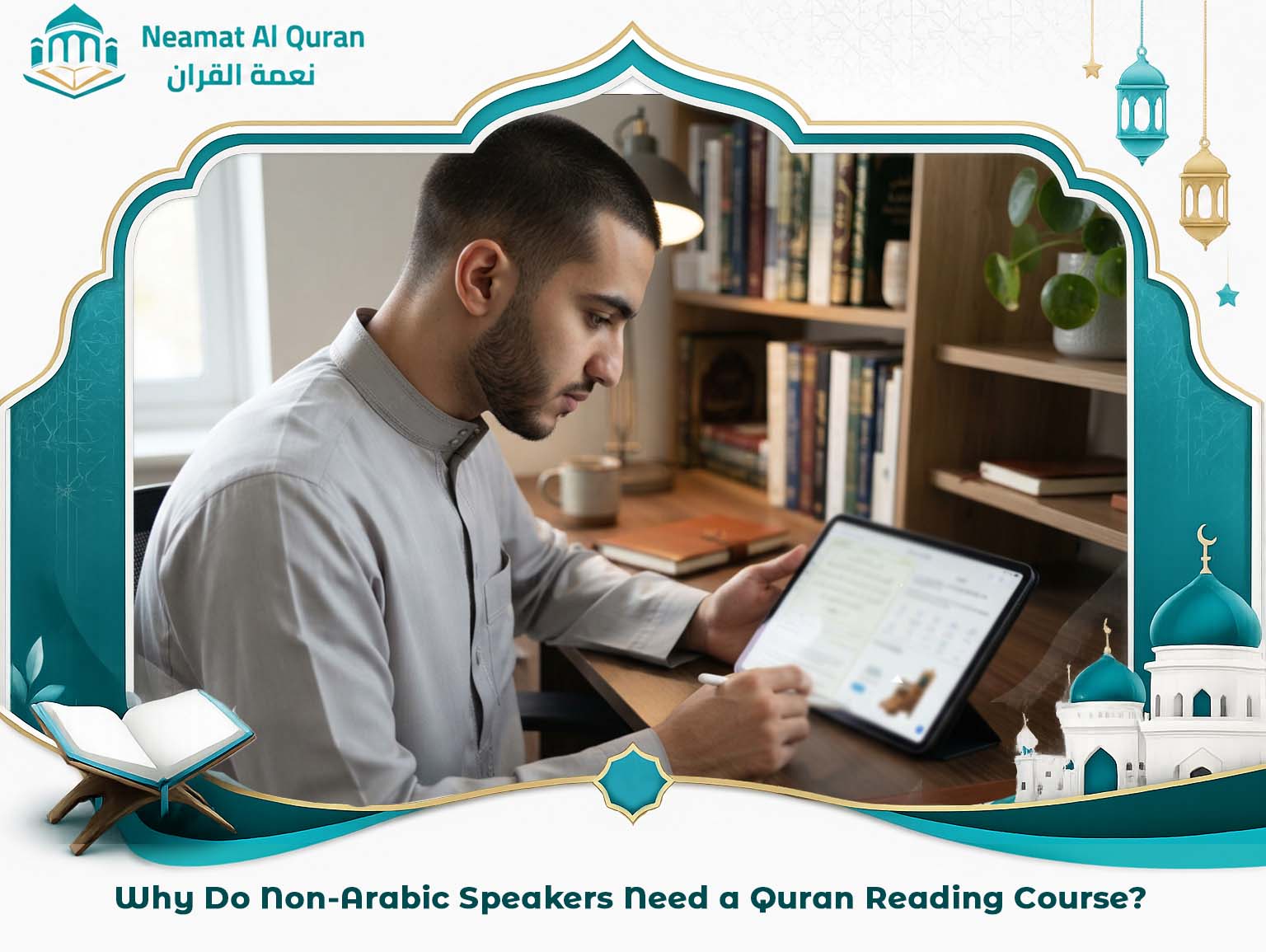
Reading the Quran requires specific skills that are not automatically developed by knowing another language. A person may be fluent in English, for example, but still be unable to identify the difference between several Arabic letters. The learner may also be unfamiliar with short vowels, letter connections, or pronunciation rules.
This is why simply giving a beginner a Quran and asking them to start reading may create unnecessary frustration. A structured course breaks the learning process into manageable steps.
The student can first learn the Arabic alphabet. Once the letters become familiar, the teacher introduces their sounds and vowel marks. After that, the learner practices joining letters together and reading simple combinations. Gradually, Quranic words become easier to recognize.
This method gives students a clear sense of progress. Another important reason for structured instruction is pronunciation. Some Arabic letters are pronounced from specific parts of the mouth or throat. A student who has never encountered these sounds may naturally replace them with sounds from their native language.
For example, a learner may find certain throat letters difficult because their first language does not contain equivalent sounds. A qualified teacher can demonstrate the correct pronunciation and listen to the student’s attempt.
This immediate feedback is extremely valuable. The goal is not to make the learner feel that every mistake is serious. Instead, corrections should help the student understand exactly what needs improvement.
Discover the Wisdom of the Quran with Neamat Al Quran Academy
Are you ready to go beyond simple recitation and understand the true guidance of the Quran in your daily life? At Neamat Al Quran Academy, qualified teachers help students explore the meanings of the Quran clearly and practically, which strengthens their faith.
Through structured online lessons, learners improve their understanding and apply Quranic teachings in real situations. Each class encourages reflection, growth, and a deeper connection with Allah’s words. Start your journey today with Neamat Al Quran Academy and build a stronger relationship with the Quran.

What does a Quran reading course for non-Arabic speakers teach?
A good course should take the learner from the basics of Arabic reading to confident Quran recitation. The exact curriculum can vary according to age and ability, but several core areas are particularly important.
Arabic alphabet recognition
The first stage is recognizing Arabic letters. Students learn each letter’s name, shape, and basic sound. This may sound simple, but it is essential. If the student is constantly trying to remember what a letter looks like, reading a Quranic word becomes much harder.
Teachers therefore give students repeated exposure to the alphabet until recognition becomes increasingly automatic.
Letter connections
Arabic letters can change their appearance depending on their position within a word. A beginner who knows isolated letters may therefore be surprised when the same letter appears differently inside a Quranic word.
Learning connected forms allows the student to move from individual symbols to complete words.
Short vowels
Arabic vowel marks provide important information about pronunciation. Students learn how marks such as Fathah, Kasrah, and Dammah affect the sound of a letter. They also learn how Sukoon and other signs influence reading.
The purpose is to help the student look at a written word and understand how it should be pronounced.
Reading simple words
Once students understand letters and vowel signs, they begin reading short combinations and Quranic words.
This is where theory becomes practical. The teacher listens carefully and identifies problems such as missing vowels, incorrect letter sounds, unnecessary pauses, or confusion between similar letters.
Gradual Quran recitation
The learner eventually begins reading verses and short Surahs. At this stage, the teacher can introduce Quran-specific pronunciation principles and basic Tajweed rules.
The progression should remain gradual. A student who struggles with individual letters should receive additional practice rather than being pushed too quickly into longer passages.
Quran reading course for non-Arabic speakers with a Step-by-Step Method
A step-by-step method is particularly useful for students who have never studied Arabic. Instead of presenting the Quran as a large and complicated text, the teacher divides learning into small achievements.
The first achievement may be recognizing all Arabic letters. The next may be reading letters with short vowels. After that, the student can practice connecting letters.
Then come simple words, short phrases, and eventually Quranic verses. This progression provides motivation because students can see measurable improvement.
A beginner may initially need several seconds to identify a letter. After regular practice, recognition becomes faster. Eventually, the student can focus less on individual letters and more on the complete word.
Step 1: Assess the student’s level
Before beginning, the teacher should determine what the learner already knows.
Some students are complete beginners. Others learned Arabic letters as children but have forgotten them. Some can read slowly but make frequent pronunciation errors.
Each situation requires a slightly different starting point.
Step 2: Establish the foundation
Students who need basic instruction begin with Arabic letters, their sounds, and their written forms.
The teacher should make sure the student can recognize the letters consistently before moving forward.
Step 3: Build reading ability
The student begins combining letters and reading words.
At this stage, repetition is important. Reading the same patterns several times helps establish familiarity.
Step 4: Introduce Tajweed gradually
Once the student has basic reading skills, Tajweed concepts can be introduced according to their level.
Rules should be explained through examples and practical reading rather than through definitions alone.
Step 5: Apply the rules during recitation
The learner reads Quranic passages while the teacher listens.
The student receives corrections and repeats difficult words or phrases.
Step 6: Develop independence
The final objective is for the learner to read more independently while maintaining accurate pronunciation.
The teacher continues to monitor progress and address areas that need improvement.
Quran reading course for non-Arabic speakers with Tajweed
Tajweed is an important part of Quran recitation because it teaches students how to pronounce Quranic letters and words correctly.
For beginners, however, Tajweed can appear complicated because it contains unfamiliar Arabic terminology and several different rules.
The best approach is to introduce Tajweed gradually. Students first need to understand basic pronunciation. Then they can learn rules that appear frequently in their reading.For learners who want to improve their Quran recitation, what is tajweed and why is it important explains the role of Tajweed in accurate pronunciation and consistent reading.
For example, learners may study articulation points, elongation, Qalqalah, and rules connected with Noon Sakinah, Tanween, and Meem Sakinah. The teacher should connect each rule to actual Quranic examples. This makes the lesson easier to remember.
Understanding articulation points
Arabic letters are produced from different areas of the mouth and throat.A student who pronounces a letter from the wrong place may produce a sound that is noticeably different from the intended pronunciation.
Therefore, learning where a sound originates is useful.A teacher can demonstrate the sound, explain the movement involved, and then listen to the learner.
Learning elongation
Some Quranic sounds require elongation according to specific rules. Beginners may initially find it difficult to know when a sound should be extended and for how long. Through repeated listening and practice, the learner gradually becomes more comfortable.
Understanding Qalqalah
Qalqalah is another area that beginners may encounter during Quran recitation. The student needs to recognize the relevant letters and understand how the sound changes when the rule applies.
Rather than memorizing a definition without context, students should practice examples from the Quran.
Applying Tajweed naturally
The long-term objective is not for the learner to stop after every word and mentally recite a list of rules. With practice, many rules should become increasingly natural. This is why practical recitation is an essential part of Tajweed education.
Quran reading course for non-Arabic speakers for Adults
Adults often believe that they are too old to start learning Quran reading. This is not true. Adults can learn to read the Quran even if they have never studied Arabic before. They may simply need a teaching method that respects their existing responsibilities and learning pace.
Adult learners often have jobs, families, and other commitments. They may not be able to dedicate several hours every day to Quran study. A flexible learning schedule can therefore make a significant difference.
Adults should not be embarrassed about starting from zero
One of the biggest barriers for adult learners is embarrassment. Some people avoid Quran lessons because they feel uncomfortable admitting that they cannot read Arabic. There is no reason to feel ashamed.
Every skill has a starting point. Learning the Arabic alphabet as an adult is simply the beginning of a new educational journey.A patient teacher can create an environment where mistakes are treated as part of the learning process.
Adults benefit from realistic goals
A learner might set a goal such as reading a short Surah independently or reducing the number of pronunciation corrections during a lesson.
Small goals are often easier to achieve than vague expectations such as “I want to become fluent quickly.”As these smaller achievements accumulate, the learner develops confidence.
Consistency is especially important
An adult may not have much free time, but regular practice can still produce meaningful progress. A short review session after a lesson can help reinforce new material. The key is to create a routine that the learner can realistically maintain.
Quran reading course for non-Arabic speakers for Children
Children who do not speak Arabic need a simple, age-appropriate approach. Lessons should begin with Arabic letters, sounds, and basic reading skills before introducing complex Tajweed or grammar. Short explanations, repetition, and interactive practice can help children learn confidently without feeling overwhelmed.
Making Arabic letters familiar
Children can practice recognizing letters through repetition and guided reading. The Quran teacher for kids online can ask the child to identify letters, pronounce them, and distinguish between similar forms.
Building confidence through repetition
Children often need to encounter the same concept many times before it becomes familiar. Repeating an exercise is not necessarily a sign that the child is falling behind. Instead, repetition helps turn recognition into a stable skill.
Correcting pronunciation positively
Children need correction, but the manner of correction matters. Instead of focusing only on what the child did incorrectly, teachers can acknowledge correct attempts and then model the sound again. This keeps the learning environment encouraging.
Supporting children at home
Parents can help by creating a routine. The child does not necessarily need a long practice session every day. A short review can be enough to reinforce what was covered during the lesson.
Parents can also encourage the child rather than comparing their progress with other children. Every learner develops at a different pace.
Quran reading course for non-Arabic speakers With Female Teachers
Some families and students prefer learning with female Quran teachers. This may be particularly important for women, girls, or families who feel more comfortable with female instruction.
A suitable female teacher should not only know Quran recitation and Tajweed but should also understand how to teach learners who do not speak Arabic. Clear explanations are particularly important because students may not immediately understand Arabic terminology.
A good teacher can explain the concept in a language the learner understands and then demonstrate the Arabic pronunciation.
At Neamat Al Quran Academy, students can communicate their preferences and learning needs so that lessons can be organized around their circumstances. The teacher’s patience is especially important for beginners.
A student may need to hear the same sound several times before being able to reproduce it correctly. Instead of rushing, the teacher can slow down, demonstrate again, and allow the learner to practice.
How to Choose the Best Quran Course for a Non-Arabic Speaker?
Choosing a Quran course requires careful consideration. The cheapest program is not automatically the best, and a large curriculum does not necessarily guarantee better results.
Students should look for a program that provides appropriate instruction, teacher feedback, flexible scheduling, and a clear learning pathway.
Look at the teaching method
Ask whether beginners can start from the alphabet. A course designed mainly for advanced students may not be suitable for someone who cannot yet read Arabic.
Consider teacher experience
Teaching Quran to non-Arabic speakers requires patience and communication skills. The teacher should understand the difficulties that learners face when Arabic is unfamiliar.
Look for individual correction
Reading the Quran is a practical skill. Students need to read aloud and receive corrections. A program that relies entirely on self-study may not identify pronunciation problems effectively.
Check lesson flexibility
Students living outside Arabic-speaking countries may have different schedules. Flexible lesson times can help them maintain consistency.
Think about long-term goals
The learner should know what they want to achieve. Some students want basic Quran reading skills. Others want to improve Tajweed, prepare for memorization, or develop stronger recitation. The chosen course should support that objective.
The Benefits of Learning Quran Reading Online
Online Quran education gives learners access to instruction without requiring them to travel to a physical location. This is particularly helpful for Muslims who live in countries where Quran teachers are not readily available.
Students can attend lessons from home and often choose times that fit their schedules. For parents, online lessons can also reduce travel time and make it easier to organize Quran education around school and family commitments.
However, effective online learning requires preparation. The student should have a stable internet connection, a suitable device, a working microphone, and a quiet place for the lesson.
For children, parents should try to remove unnecessary distractions. The student should also have the Quran and any required learning materials ready before the lesson begins.
How Do Online Quran Lessons Work?
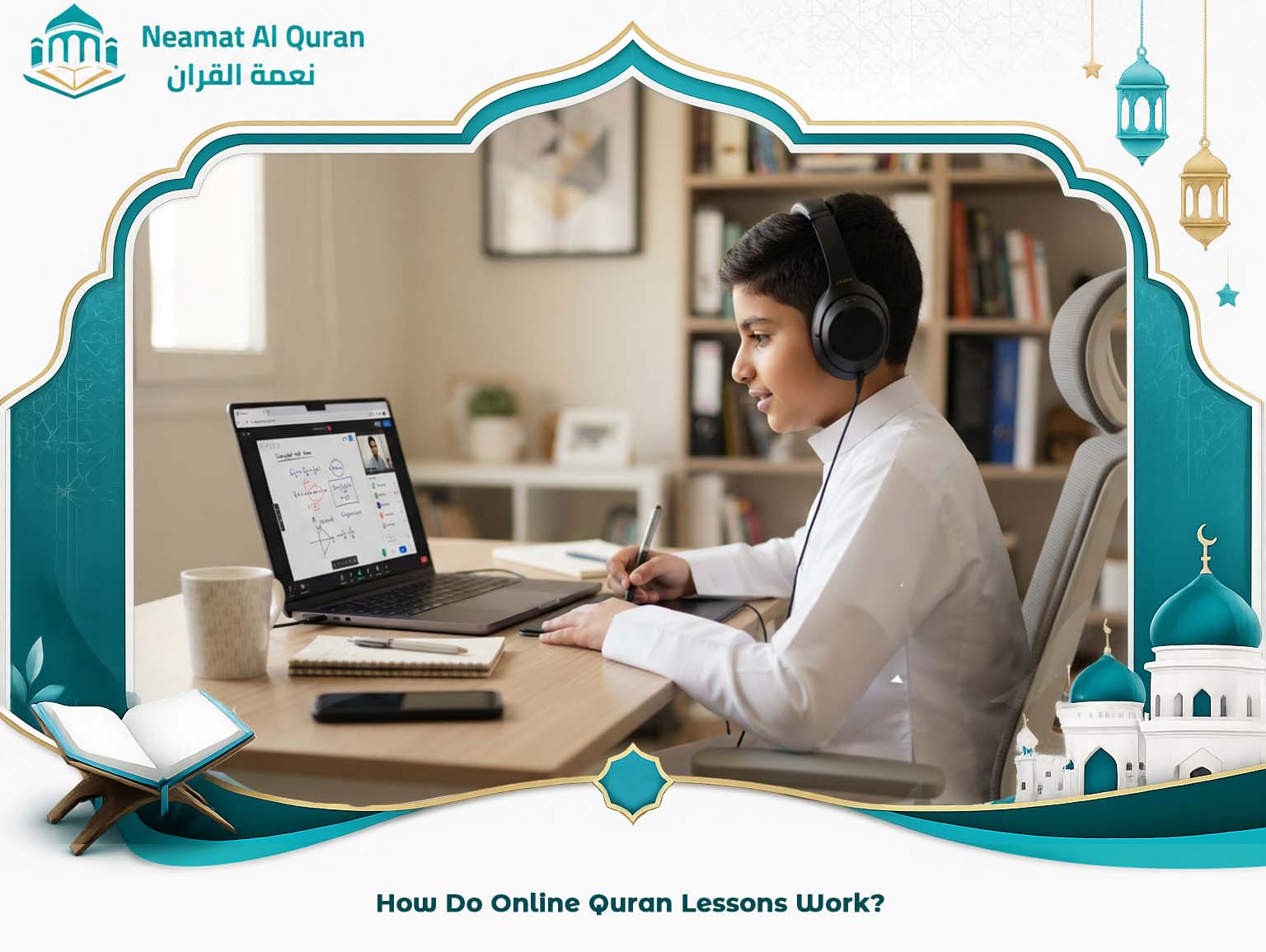
A typical Quran class for beginners near me begins with a short review of material covered previously. The teacher may ask the student to read letters, words, or verses.
This helps the teacher determine whether the student has retained the previous lesson. New material is then introduced. The teacher explains the concept, demonstrates pronunciation, and asks the student to practice.
The final part of the lesson may include Quran reading and correction. The exact structure depends on the learner’s age and level.
A young beginner may spend more time on letters and basic sounds, while an advanced student may spend most of the lesson reading Quranic passages and correcting Tajweed.
Creating a Distraction-Free Quran Learning Space
A quiet learning environment can make online Quran classes for adults more productive. Students should avoid attending lessons while walking around the house, watching television, or using other devices.
Children may need additional supervision. Parents can prepare a small learning area where the child knows that Quran class takes place.
Adults can also benefit from setting aside a specific time and place for their lessons. This creates a psychological connection between the environment and learning. When the student enters the learning space, they know that it is time to focus.
Common Difficulties Faced by Non-Arabic Speakers
Every learner experiences challenges, but some difficulties appear frequently among non-Arabic speakers.
Confusing similar letters
Arabic has several letters that may look or sound similar to beginners. Regular comparison exercises can help students distinguish them.
Difficulty with throat sounds
Some Arabic sounds originate from the throat and may feel unfamiliar. These sounds require repeated practice.
Reading slowly
Slow reading is normal during the early stages. Accuracy should be developed before speed.
Forgetting vowel marks
Students may recognize a letter but forget how its vowel changes the pronunciation. Repeated reading exercises can help.
Losing confidence
A learner may feel discouraged after making repeated mistakes. Teachers and parents can help by emphasizing progress rather than perfection.
How to Improve Quran Reading Between Lessons?
Lessons provide guidance, but independent practice is equally important. Students should review recently learned letters, words, and verses.
Reading aloud is particularly useful because it allows the learner to hear their own pronunciation. Listening to reliable Quran recitation can also help students become familiar with correct sounds and rhythm.
However, learners should avoid simply copying sounds without understanding the teacher’s corrections. If a teacher has identified a specific pronunciation issue, the student should focus on that issue during practice.
For example, if a learner repeatedly confuses two letters, they can spend several minutes practicing the difference between them. Focused practice is usually more productive than simply reading large amounts of text without paying attention to mistakes.
How Parents Can Support a Child Learning Quran?
Parents have an important role in creating positive Quran learning habits.The first step is to establish a regular routine.Children benefit from knowing when their Quran lesson takes place and when they should review.
Parents should also avoid turning every mistake into a criticism. Learning to read Arabic takes time, and children may need many repetitions. Positive encouragement can help maintain motivation.
Parents can also ask the child to demonstrate something they learned rather than constantly asking whether they practiced. For example, a child might proudly read a few words they recently learned. This creates a more positive connection with Quran education.
Measuring Progress in Quran Reading
Progress should not be measured only by the number of pages a student completes. Quality is more important than quantity.A student may read fewer verses but pronounce them more accurately than before. Useful indicators include:
- Faster recognition of Arabic letters.
- Better understanding of vowel marks.
- Improved ability to connect letters.
- Fewer repeated pronunciation mistakes.
- Greater confidence while reading aloud.
- Better application of basic Tajweed.
- Smoother reading of familiar Surahs.
- Greater independence during recitation.
Teachers can use these indicators to determine whether the student is ready for more advanced material.
How Long Does It Take to Learn Quran Reading?
There is no universal timeline for learning to read the Quran. Every learner starts from a different level, so the time required depends on several factors, including age, previous knowledge of Arabic letters, pronunciation ability, lesson frequency, and the amount of practice between lessons. A structured Quran reading course for non-Arabic speakers can help beginners progress gradually without feeling pressured to reach a specific level within a fixed number of days.
A complete beginner who has never studied Arabic may need more time than someone who already recognizes the Arabic alphabet. Likewise, a student who understands how letters connect may progress faster than a learner who needs to start with individual letters and vowel sounds. For this reason, realistic learning goals are more useful than promises about completing Quran reading within a certain period.
A good Quran reading course for non-Arabic speakers usually divides the learning process into clear stages. Students may begin by recognizing Arabic letters and their different forms, then learn short and long vowels, practice connecting letters, and gradually move toward reading complete words and short Quranic passages. Once these foundations become stronger, the student can begin focusing more closely on pronunciation and Tajweed.
The most important factor is consistent practice. A student who spends a short amount of time practicing regularly may achieve better long-term results than someone who studies intensively for a few days and then stops. Therefore, patience and consistency should remain central throughout the learning journey.
Developing a Lifelong Relationship With Quran Recitation
Completing an introductory course should not be considered the end of Quran reading education. Instead, it should mark the beginning of a stronger and more independent relationship with Quran recitation. The foundation gained through a Quran reading course for non-Arabic speakers can be developed through regular reading, revision, Tajweed practice, memorization, and continued guidance.
After becoming comfortable with basic reading, students can gradually increase the amount they recite each day. They may begin with a few verses and eventually progress to longer Surahs or regular portions of the Quran. This continued practice helps maintain fluency and prevents previously learned skills from becoming weak.
For non-Arabic speakers, Quran recitation can also provide an introduction to the Arabic language. Repeated exposure to Quranic words allows students to recognize familiar expressions over time. Although learning to read does not automatically mean becoming fluent in Arabic, regular Quran study can create a useful foundation for further language learning.
A Quran reading course for non-Arabic speakers can therefore become the first stage of a broader educational journey. Once students are comfortable reading, they may choose to study Tajweed in greater depth, memorize additional Surahs, learn Quranic vocabulary, or explore reliable explanations of the verses they recite.
Learning Quran Reading and Understanding Its Meaning
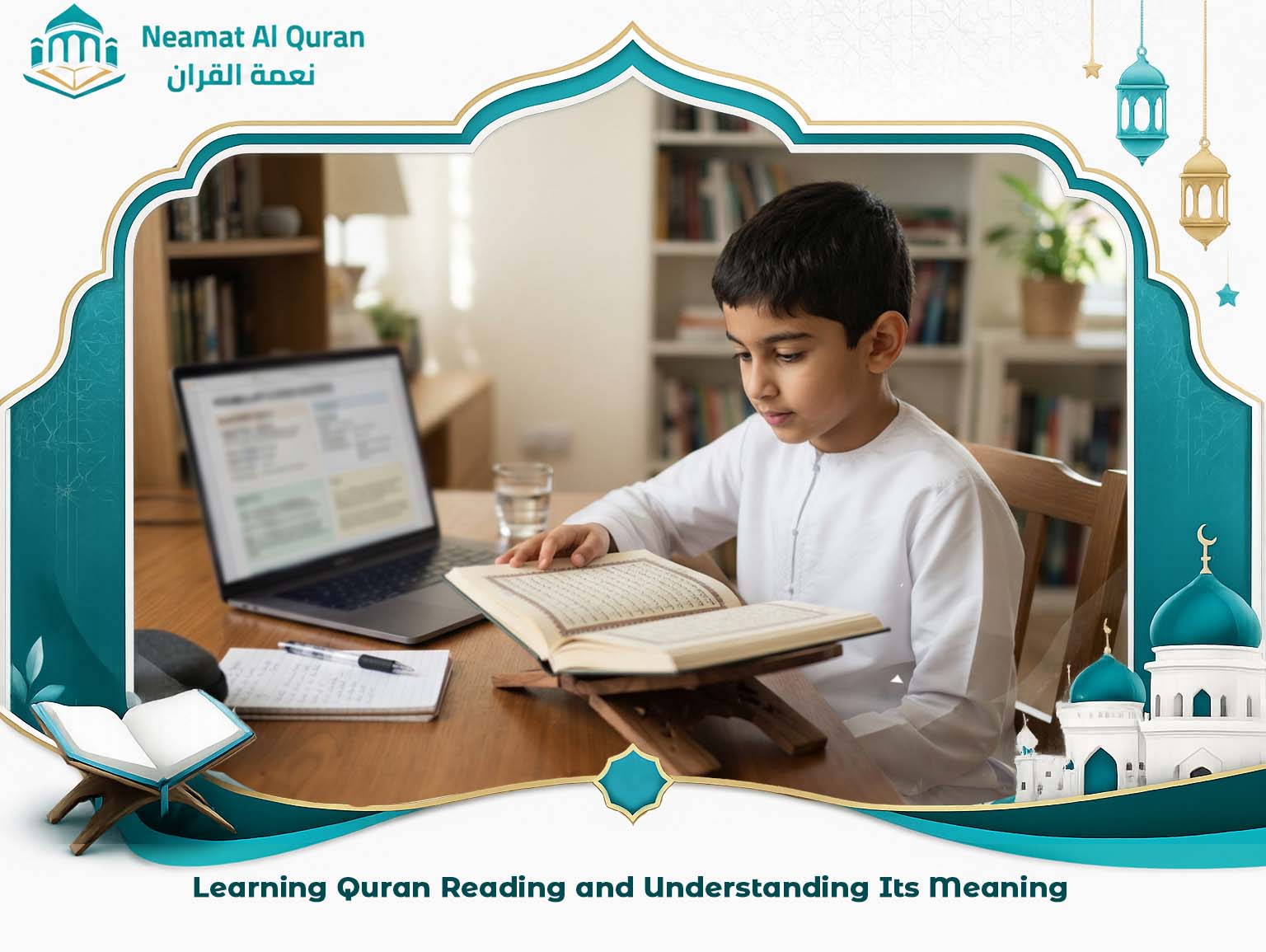
Reading the Quran correctly and understanding its meaning are related but separate skills. A learner does not need to become fluent in Arabic before beginning Quran recitation. In fact, a structured Quran reading course for non-Arabic speakers allows students to develop reading skills while gradually becoming familiar with commonly repeated Quranic words and expressions.
Understanding even the general meaning of the verses being recited can make the learning experience more meaningful. Students can begin by studying the meanings of short Surahs that they use frequently in prayer. They can also learn the meanings of common Quranic words that appear repeatedly throughout different passages.
This gradual approach prevents students from feeling that they must master Arabic grammar and vocabulary before they can appreciate what they are reading. Instead, reading, listening, vocabulary, and understanding can develop alongside one another.
For example, when a student learns how to pronounce a frequently repeated Quranic expression and then discovers its general meaning, the recitation becomes easier to connect with. The student is no longer treating the Quran only as a collection of sounds and letters but is beginning to connect recitation with reflection and understanding.
Building a Consistent Quran Study Routine
Consistency is one of the strongest factors influencing progress in Quran learning. Even the most carefully designed Quran reading course for non-Arabic speakers will produce limited results if the student rarely practices outside the lesson. Regular review allows newly learned skills to become more familiar and reduces the likelihood of forgetting previous material.
A practical study routine does not necessarily require several hours every day. For many learners, a scheduled lesson combined with short daily practice can be more sustainable. The student might spend a few minutes reviewing Arabic letters, practicing difficult sounds, or reading a short passage aloud.
Adults can organize their practice around work, family responsibilities, and other commitments. Parents can establish shorter sessions for children and connect Quran practice with their existing school routine. The goal is to create a schedule that the learner can maintain consistently.
A sustainable routine is generally more valuable than an intensive plan that becomes difficult to maintain. Small amounts of focused practice, repeated regularly, can gradually improve pronunciation, recognition, confidence, and reading fluency.
Mistakes to Avoid When Learning Quran Reading
Beginners can sometimes make their learning journey more difficult by trying to study too many skills simultaneously. A student may attempt to memorize the entire alphabet, master Tajweed rules, learn vocabulary, study translation, and memorize Surahs at the same time. Although all of these areas are valuable, combining them too early can create confusion.
A well-structured Quran reading course for non-Arabic speakers should introduce skills progressively. The learner can first establish accurate letter recognition and pronunciation before moving toward more complex reading patterns. Once the foundation becomes stable, additional Tajweed concepts can be introduced gradually.
Another common mistake is prioritizing speed over accuracy. Reading quickly is not necessarily an indication of good Quran recitation. Beginners should focus first on recognizing each letter and producing its sound correctly. Speed and fluency can develop naturally as accuracy improves.
Ignoring correction is another problem. If a student repeatedly pronounces a letter incorrectly without receiving feedback, the incorrect pronunciation can become a habit. A teacher can identify these mistakes early and provide practical exercises to correct them.
Finally, learners should avoid comparing their progress with that of other students. Each person has a different background, learning speed, and level of previous exposure to Arabic. Progress should be measured by comparing the student’s current ability with their own previous performance.
Why Patience Is Essential in Quran Learning
Learning to read the Quran can be challenging, especially for students who have never studied Arabic. Some letters may require repeated practice, while certain pronunciation points may take considerable time to master. This is why patience is an essential part of every Quran reading course for non-Arabic speakers.
There may be lessons in which progress feels obvious and others in which improvement seems very slow. This does not necessarily mean that the learner is failing. Language and pronunciation skills often develop gradually through repetition.
A good teacher can make difficult skills easier by dividing them into smaller steps. Instead of asking a beginner to read an entire passage immediately, the teacher may focus on a single sound, word, or short phrase. Once the student becomes comfortable with that element, the next step becomes easier.
Students should also recognize small achievements. Correctly pronouncing a difficult letter after several attempts is meaningful progress. Reading a complete word independently for the first time is another important milestone. Over time, these small improvements combine to create stronger reading ability and greater confidence.
Why a Personalized Learning Approach Matters?
Not every Quran student needs the same type of instruction. Two learners may join the same Quran reading course for non-Arabic speakers while having completely different strengths and weaknesses.
One-on-One Quran Classes Online: A student may recognize Arabic letters easily but struggle with pronunciation. Another may pronounce many sounds correctly but have difficulty identifying letters when they appear in connected forms. A third learner may already read Quranic passages but require additional support with Tajweed and fluency.
For this reason, personalized instruction can make the learning process more effective. The teacher can evaluate the student’s current level and identify the areas that require the most attention. Lessons can then focus on specific needs rather than forcing every learner to follow exactly the same pace.
At Neamat Al Quran Academy, learners can receive instruction according to their individual starting point. This approach can help beginners avoid unnecessary repetition while ensuring that important foundational skills are not skipped.
Personalization is particularly valuable for non-Arabic speakers because students may experience difficulties that are unfamiliar to them. A qualified teacher can explain Arabic sounds clearly, demonstrate pronunciation, and provide repeated practice until the learner becomes more comfortable.
The Role of Teacher Feedback
Teacher feedback is an essential component of effective Quran reading education. A learner may hear their own pronunciation and assume it is correct without realizing that a particular Arabic sound needs adjustment. This is especially common among beginners who have not previously studied Arabic phonetics.
Within a Quran reading course for non-Arabic speakers, the teacher can listen carefully to the student’s recitation and identify specific pronunciation problems. The teacher can then demonstrate the correct sound and explain how the student should position the mouth or control the sound.
Effective feedback should be clear and constructive. Simply telling a learner that a pronunciation is wrong does not necessarily help them understand how to improve it. Instead, the teacher should identify the specific issue, demonstrate the correct pronunciation, and allow the student to repeat it several times.
The same principle applies to Tajweed. Students may need help recognizing where a sound should be extended, where a letter should be pronounced clearly, or how certain letters affect the flow of recitation. Regular feedback allows these corrections to become part of the student’s natural reading habits.
Preparing for Your First Quran Lesson
Preparing for the first lesson can make the learning experience more comfortable and productive. Students should have access to a Quran, a reliable internet connection, and a quiet place where they can concentrate without unnecessary interruptions.
It is also useful to keep a notebook nearby. Students can write down difficult letters, pronunciation corrections, new vocabulary, or practice assignments given by the teacher. These notes can make independent review easier between lessons.
Before beginning a Quran reading course for non-Arabic speakers, students should not worry about making mistakes. The first lesson is often an opportunity for the teacher to assess the learner’s current ability and determine the most suitable starting point.
A beginner may be asked to identify Arabic letters, pronounce individual sounds, read simple combinations, or recite a short passage. These activities are not designed to judge the student negatively. Instead, they help the teacher understand what the learner already knows and what needs to be taught.
Students who are completely new to Arabic should feel comfortable explaining this to the teacher. Starting from the beginning is perfectly acceptable, and a structured learning plan can gradually build the required skills.
Quran Reading Course for Non-Arabic Speakers: Your Goal
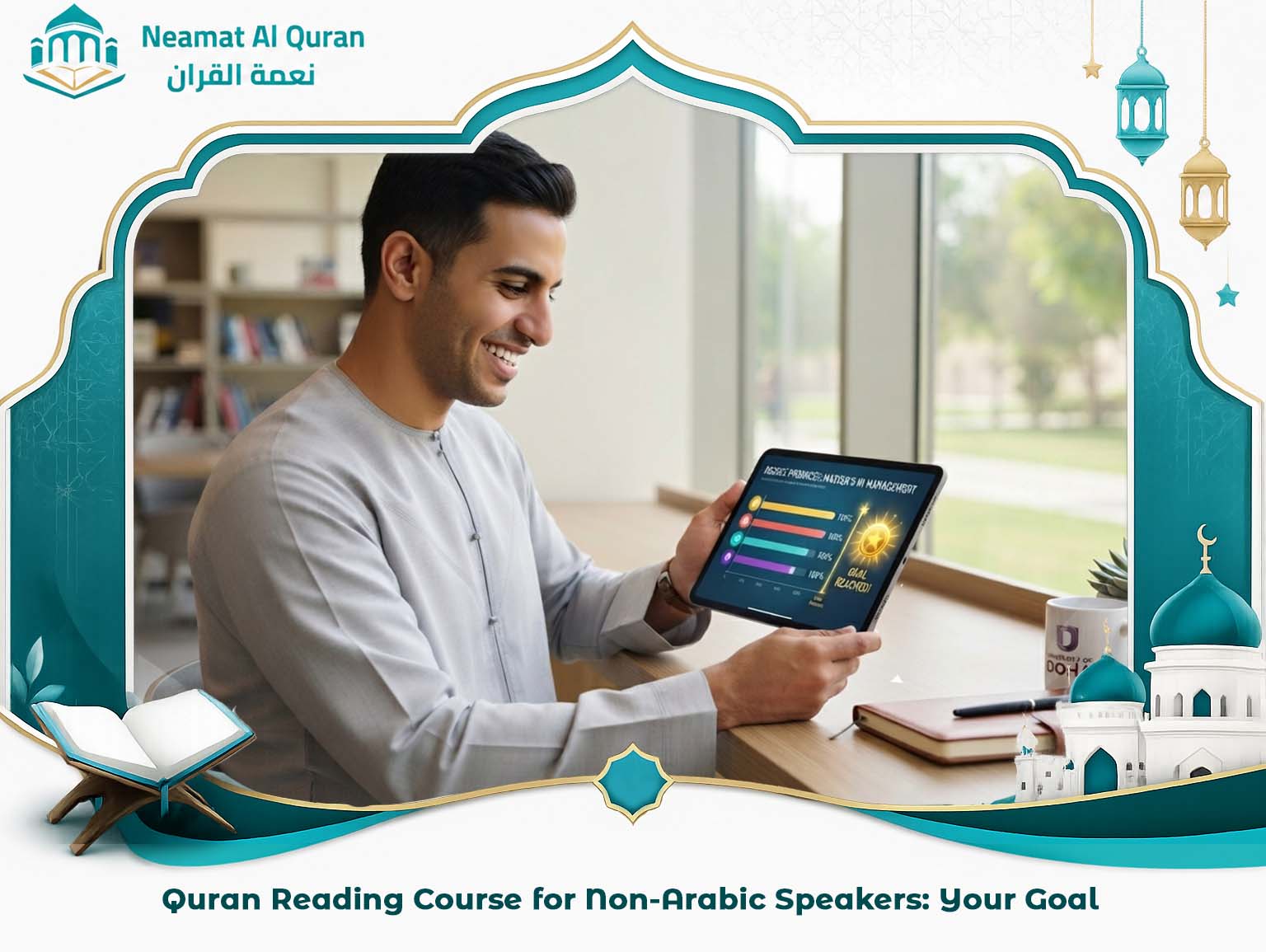
The main goal of a Quran reading course for non-Arabic speakers should not simply be completing a fixed number of lessons. A more useful goal is developing practical reading abilities that allow the student to recite the Quran with increasing independence and accuracy.
For a complete beginner, the first objective may be recognizing the Arabic alphabet confidently. The next stage can focus on understanding how to speak Arabic letters change shape when they appear at different positions in a word. Students can then practice vowel marks and begin combining letters into readable words.
Once these skills become stronger, the learner can move toward short Quranic passages and commonly recited Surahs. At this stage, the teacher can gradually introduce appropriate Tajweed rules and focus on improving pronunciation, fluency, and confidence.
The final objective is not simply to read words from a page. It is to develop a reliable foundation that enables the student to continue Quran recitation independently. A successful Quran reading course for non-Arabic speakers should therefore give learners practical skills they can continue using long after the course ends.
Students should also set realistic personal goals. One learner may want to read the Quran independently, while another may want to improve recitation for prayer or prepare for memorization. Identifying the purpose of learning helps the teacher create a more relevant and motivating study plan.
With consistent practice, appropriate guidance, patience, and realistic goals, non-Arabic speakers can gradually develop the skills needed to read the Quran correctly. The journey may take different amounts of time for different learners, but every stage of improvement brings the student closer to confident and meaningful Quran recitation.
Frequently Asked Questions
Discover answers to common questions about the Quran Reading Course for Non-Arabic Speakers and learn how beginners can start reading the Quran confidently.
Can I Join a Quran Reading Course for Non-Arabic Speakers If I Know Absolutely No Arabic?
Yes. A Quran reading course for non-Arabic speakers can be suitable for complete beginners who have never studied Arabic before. Lessons can start with the Arabic alphabet, letter recognition, basic vowel sounds, and correct pronunciation.
Should I Learn Conversational Arabic Before Starting a Quran Reading Course for Non-Arabic Speakers?
No. Conversational Arabic and Quran reading are different learning goals. A Quran reading course for non-Arabic speakers focuses primarily on helping learners recognize Arabic letters, read Quranic words, improve pronunciation, and gradually develop accurate recitation.
What If I Keep Forgetting Arabic Letters During My Quran Reading Course for Non-Arabic Speakers?
Forgetting letters is common during the early stages of learning. A Quran reading course for non-Arabic speakers should include regular revision so that students can strengthen letter recognition over time.
How Often Should I Practice After Joining a Quran Reading Course for Non-Arabic Speakers?
Regular practice is more important than studying for long hours occasionally. After joining a Quran reading course for non-Arabic speakers, learners can benefit from short practice sessions between lessons.
Can Children Join a Quran Reading Course for Non-Arabic Speakers?
Yes. Children can learn Quran reading even if Arabic is not their first language. A suitable Quran reading course for non-Arabic speakers can introduce children to Arabic letters, pronunciation, reading patterns, and basic Tajweed in an age-appropriate way.
Can Adults Start a Quran Reading Course for Non-Arabic Speakers From Zero?
Absolutely. Adults can begin a Quran reading course for non-Arabic speakers without having previous Arabic knowledge. The teacher can first assess the learner’s level and then establish an appropriate starting point.
In conclusion, learning to read the Quran is a rewarding journey that does not require you to speak Arabic fluently. A well-structured Quran reading course for non-Arabic speakers can help beginners build a strong foundation in Arabic letters, pronunciation, Quran reading, and Tajweed step by step.
Choosing the right Quran reading course for non-Arabic speakers allows students to learn according to their level, age, and individual needs. With patient guidance and regular practice, learners can overcome common pronunciation difficulties and become more confident in reciting the Quran.
Neamat Al Quran Academy supports learners who want to improve their Quran reading through structured lessons, personalized guidance, pronunciation practice, and gradual Tajweed instruction. A suitable Quran reading course for non-Arabic speakers can make the learning process clearer and more manageable for students starting from different levels.