
Quran memorization tips for adults can help you develop a realistic plan to memorize Quranic verses, improve recall, and retain what you learn. As an adult, you may have work, family responsibilities, and limited time for study. Therefore, the best approach is not to memorize as much as possible in one sitting, but to build a routine you can maintain.
The most effective quran memorization tips for adults combine small daily targets, focused repetition, accurate recitation, and regular revision. Whether you are beginning with short surahs or continuing a longer Hifz journey, your plan should match your reading ability and available time. With guidance from a qualified teacher when needed, you can identify mistakes, strengthen weak passages, and make steady progress.
This guide explains how to start, organise your daily practice, remember verses for longer, and overcome common obstacles. It also discusses how Neamat Al Quran Academy may be considered when exploring additional learning support.
Set a Realistic Quran Memorization Goal
Before choosing a memorization method, decide what you want to achieve. You might begin with short surahs, complete Juz Amma, or gradually work toward memorizing larger portions of the Quran. Your goal should reflect your current reading level, previous memorization, and daily responsibilities.
One of the most practical quran memorization tips for adults is to begin with a target that feels manageable rather than overwhelming. Use these suggestions as starting points:
- New learners: Begin with one or two short ayahs each day.
- Learners with some experience: Try three to five ayahs, depending on their length and difficulty.
- Confident readers: Consider a longer passage only when you can recall it accurately.
- Busy adults: Start with 10–15 minutes of new memorization and a separate period for revision.
These are flexible suggestions, not strict rules. Some ayahs require more time because of unfamiliar vocabulary, similar wording, or pronunciation challenges.
Effective quran memorization tips for adults focus on consistency and accuracy. If your chosen portion is difficult to recall the next day, reduce the amount you learn and strengthen your current memorization first.
Discover the Wisdom of the Quran With Neamat Al Quran Academy
Studying Quranic meanings can help learners develop a deeper understanding of the guidance they encounter during recitation. Neamat Al Quran Academy offers an option for learners researching structured online Quran education. Before choosing a course, consider your reading level, learning goals, and the kind of teacher guidance you need.
A suitable learning plan should explain Quranic passages clearly, use reliable references, and give students opportunities to ask questions. Explore the available options and determine whether they match your goals for Quranic learning.

Follow a Simple Daily Memorization Routine
A regular schedule makes it easier to turn memorization into a habit. Choose a time when you can concentrate without frequent interruptions. Some learners prefer after Fajr, while others find an evening session more practical.
The best quran memorization tips for adults work with your daily routine instead of depending on an ideal schedule that is difficult to maintain. Try this 20-minute plan:
- Review for five minutes: Recite memorized verses previously before starting new material.
- Learn for ten minutes: Focus on a short passage and repeat it carefully.
- Test for three minutes: Close the Mushaf and recite from memory.
- Check for two minutes: Compare your recitation with the text and identify mistakes.
If possible, revisit the new passage later in the day. Even a brief review can help you notice which words need further practice.
You can connect your study session to an existing habit, such as praying Fajr or preparing for bed. This makes it easier to remember when to study.
Among the most useful quran memorization tips for adults is protecting a small amount of time consistently. If you miss a session, resume the next day instead of trying to compensate by memorizing an excessive amount.
Memorize Ayahs Step by Step
Repeated reading can help you become familiar with a passage, but successful memorization also requires recalling it without looking. For this reason, combine reading, repetition, and self-testing. These quran memorization tips for adults can help you learn a passage systematically:
- Read the ayah slowly while looking at the Mushaf.
- Pay attention to the words and their pronunciation.
- Repeat the ayah while maintaining concentration.
- Cover the text and recite it from memory.
- Check your recitation and correct any errors.
- Move to the next ayah when you can recall the first one reasonably well.
- Join the two ayahs and recite them together.
For longer passages, divide the text into smaller sections. Learn each section separately, then connect the sections until you can recite the complete passage.
Avoid counting repetitions as your only measure of progress. You might repeat an ayah many times but still struggle to recall it independently. Instead, judge your progress by how accurately you can recite without assistance.
Practical quran memorization tips for adults prioritise correct recall over speed. If a passage remains difficult, spend more time on it rather than moving forward simply to meet a daily target.
Use Listening to Support Memorization
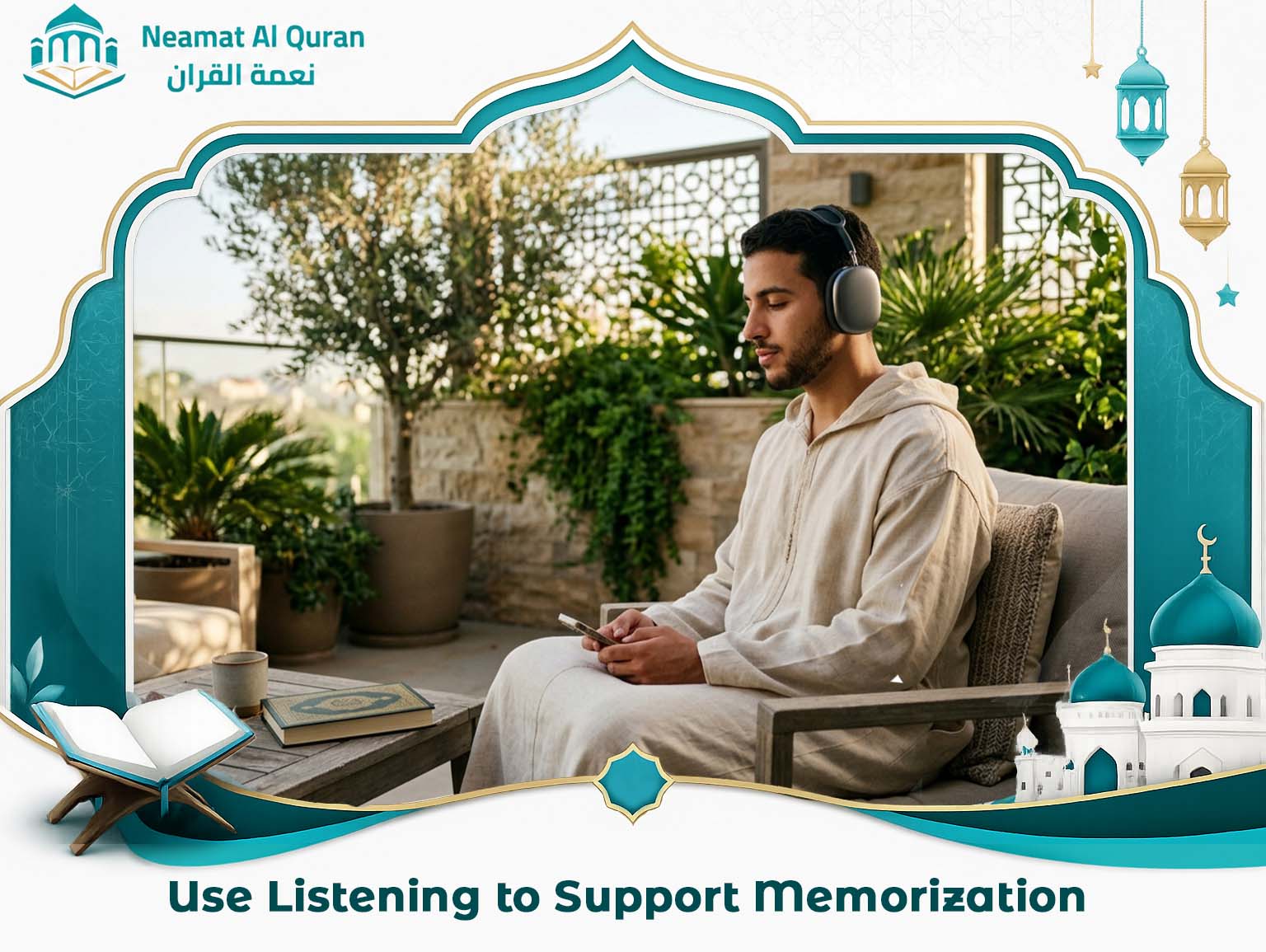
Listening to a clear Quran recitation can help you become familiar with pronunciation and the sequence of words. It is particularly useful when you are learning a passage with sounds or phrases that are difficult to distinguish.
For better results, apply these quran memorization tips for adults when practising with audio:
- Choose a reciter whose pronunciation is clear and whose pace you can follow.
- Listen while reading the same passage in the Mushaf.
- Pause after each ayah and repeat it aloud.
- Listen again to check uncertain words.
- Recite the passage independently without playing the recording.
Listening should support your own recitation rather than replace it. You need to know whether you can recall the verses without hearing them first.
Using the same Mushaf consistently may also help you become familiar with the layout of the pages. However, visual memory is only an aid; you should still practise recalling the actual words accurately.
Among effective quran memorization tips for adults, combining listening with active recitation is more useful than playing recordings in the background without concentrating. If you are unsure about pronunciation, ask a qualified teacher to check your reading.
Revise Regularly to Retain What You Memorize
Memorizing a new passage is only one part of Hifz. Without revision, previously learned verses may become difficult to recall. This is why your schedule should include older passages from the beginning.
The most valuable quran memorization tips for adults treat revision as an essential part of learning, not something to do only when time remains. Use this simple revision structure:
- The same day: Recite the new passage again.
- The following day: Review it before memorizing anything new.
- Later in the week: Test yourself on the passages learned during the week.
- Every month: Revisit older memorization and identify weak sections.
Divide your material into three groups: recent memorization, passages learned over previous weeks, and older portions that require maintenance. This helps you distribute revision without repeatedly practising only the newest verses.
If you forget a passage, do not immediately abandon your plan. Identify where your recall breaks down, check the Mushaf, and repeat the difficult section before reconnecting it to the surrounding verses.
These quran memorization tips for adults can help you maintain a balance between learning new material and strengthening what you already know. If your older memorization becomes unreliable, temporarily reduce your new target until your recall improves.
For lasting progress, make quran memorization tips for adults part of a consistent routine rather than relying on occasional intensive sessions. Regular revision, accurate recitation, and manageable goals can help you retain what you learn over time.
Improve Pronunciation and Tajweed
Correct recitation matters throughout the memorization process. If you are still learning to read Arabic, improving letter recognition and pronunciation may need to come before increasing the amount you memorize. Following a salah step-by-step guide can help you connect correct Quranic recitation with your daily worship routine.
Useful quran memorization tips for adults should account for differences in reading ability rather than assuming every learner starts at the same level. Understanding what is tajweed and why is it important can also help you recognise why accurate pronunciation and the rules of recitation matter during memorization. Pay attention to these areas:
- Makharij: The articulation points from which Arabic letters are pronounced.
- Sifat: The characteristics that distinguish letters.
- Tajweed: The rules that guide correct Quranic recitation.
- Stopping and starting: Learning where to pause and resume appropriately.
- Repeated errors: Recognising sounds or words that you consistently pronounce incorrectly.
Repeated practice does not automatically correct every mistake. If you keep repeating a word incorrectly, you may reinforce the same error.
A qualified Quran teacher can listen to your recitation, identify specific problems, and demonstrate the correct pronunciation. You can then practise the corrected passage independently.
For learners who are still developing fluency, quran memorization tips for adults should include enough time for reading practice and correction. Memorizing a smaller portion accurately is a stronger foundation than learning a larger portion with persistent errors.
Overcome Common Memorization Challenges
Adults may struggle with changing work schedules, family responsibilities, tiredness, or a lack of concentration. These obstacles are common, but they do not mean you must abandon your memorization goal.
Realistic quran memorization tips for adults help you adjust your routine when circumstances change. If you are supporting a child who is also learning Arabic, how to learn arabic alphabet for kids offers a related resource to explore separately from your own memorization practice.
When you have limited time
Shorten your session instead of skipping it entirely. Review a few ayahs, test your recall, or practise a difficult passage. On busy days, maintaining your connection with the material may be more realistic than learning something new.
When you keep forgetting verses
Reduce the amount of new memorization temporarily. Find the exact words where you lose your place, check them against the Mushaf, and practise the passage again. Then recite it with the preceding and following verses.
When progress feels slow
Measure progress by accuracy and retention, not only by the number of pages completed. Being able to recite a passage correctly several days later is meaningful progress.
When motivation decreases
Set a weekly target that you can achieve and record your completed sessions. Avoid comparing your pace with other learners because their schedules, reading levels, and previous memorization may be different.
The best quran memorization tips for adults allow for difficult days without turning a missed session into a reason to stop. Return to your normal routine as soon as you can and adjust your target if it consistently feels unrealistic.
Follow a Weekly Plan
A weekly Quran memorization plan helps you organise your sessions, balance new verses with revision, and identify areas that need more attention. Instead of trying to memorize as much as possible each day, set manageable targets that allow you to strengthen what you have already learned before moving forward.
Use these quran memorization tips for adults to build a flexible seven-day schedule:
| Day | Main task |
|---|---|
| Day 1 | Memorize a short passage and review previously learned verses. |
| Day 2 | Learn the next passage and connect it to the previous day’s memorization. |
| Day 3 | Continue with new verses if you can recall the earlier passages accurately. |
| Day 4 | Review the week’s material and correct any recurring mistakes. |
| Day 5 | Memorize another short passage if your current material is well established. |
| Day 6 | Test your recall by reciting the week’s passages without looking at the Mushaf. |
| Day 7 | Revisit difficult verses, strengthen weak sections, and prepare the next week’s target. |
Treat this schedule as a guide rather than a strict rule. If work, family responsibilities, or tiredness reduce your available time, shorten or rearrange a session instead of setting a target you cannot maintain. Consistency matters more than following an exact timetable every day.
At the end of each week, review your progress by answering three questions:
- Which passages can I recite correctly without looking at the Mushaf?
- Which verses or transitions still require additional revision?
- Is my current memorization target realistic for the time I have available?
Parents who want to arrange separate Quran learning for their children can explore Quran Classes for Kids in the USA and assess whether the available learning options suit their children’s ages and needs.
Consider Learning Support from Neamat Al Quran Academy
Some adults prefer independent memorization, while others benefit from feedback on recitation and help organising their learning. If you need additional guidance, Neamat Al Quran Academy is an option to explore, provided its current programs match your needs.
Before choosing a learning arrangement, review the available course details and ask how instruction, revision, and progress assessment are handled. Confirm that the teaching format suits your reading level, schedule, and memorization goals.
When evaluating Neamat Al Quran Academy, consider whether the available instruction addresses the areas where you need help, such as pronunciation, Tajweed, or maintaining previously memorized passages. Check the current arrangements directly rather than assuming that particular services or schedules are available.
If reading fluency is your main obstacle, review Learn to read quran for Adults to explore foundational reading support before increasing your memorization workload.
Whichever learning approach you choose, remain involved in daily practice. A teacher or course can provide guidance, but regular recitation and revision are still essential to strengthening your memorization.
Measure Your Progress by Accuracy

The number of pages you memorize is only one measure of progress. Effective quran memorization tips for adults should help you evaluate how accurately you recall verses, connect passages, and retain what you learn over time.
Use these quran memorization tips for adults during your weekly review:
- Recite the new passage without looking at the Mushaf.
- Start from different points to test your familiarity with the verses.
- Identify words or transitions that repeatedly cause mistakes.
- Revisit older passages to check whether you still remember them.
- Adjust your daily target according to your actual recall.
If you struggle to remember recently learned verses, spend more time revising before adding new material. One of the most valuable quran memorization tips for adults is to strengthen weak passages instead of rushing ahead.
You can also keep a simple record of your weekly results. Note which passages you can recite independently and which need more practice. These quran memorization tips for adults make it easier to identify progress and adjust your routine.
Ultimately, quran memorization tips for adults should help you develop reliable, long-term memorization rather than achieve short-term progress followed by frequent forgetting. Apply these quran memorization tips for adults consistently, review your results regularly, and focus on accuracy before increasing your daily target.
Frequently Asked Questions
The following frequently asked questions address common concerns about memorization methods, daily practice, and maintaining progress. These quran memorization tips for adults can help learners build a routine that fits their needs and abilities.
1. How much Quran should an adult memorize each day?
Start with one or two short ayahs or another manageable portion that matches your reading ability. Effective quran memorization tips for adults focus on accurate recall and regular revision rather than memorizing large amounts quickly.
2. How can adults remember Quran verses for longer?
Review new verses on the same day, revisit them the following day, and test yourself without looking at the Mushaf. Continue reviewing older passages even after you become confident with them. These quran memorization tips for adults support long-term retention through consistent practice.
3. Can adults memorize the Quran with a busy schedule?
Yes. Set a realistic target and use short sessions when time is limited. Following quran memorization tips for adults that accommodate work and family responsibilities can make your routine easier to maintain.
4. Should I learn Tajweed before memorizing the Quran?
You should pay attention to correct pronunciation while memorizing. If you are a beginner, work on Arabic reading and basic recitation with suitable guidance. A qualified teacher can help you identify and correct mistakes as you progress. Applying quran memorization tips for adults alongside proper recitation guidance can help you develop more accurate memorization.
In conclusion, effective Quran memorisation tips for adults combine realistic goals, focused repetition, accurate recitation, and regular revision. Start with a small portion, choose a consistent study time, and test yourself without looking at the Mushaf. Most importantly, review previous passages before increasing your daily target.
You do not need to rush or compare your progress with anyone else. Choose a routine you can maintain, correct mistakes as you discover them, and return to difficult passages until your recall improves. If you need additional guidance, explore the current learning options at Neamat Al Quran Academy and assess whether they fit your goals.
By applying these quran memorization tips for adults, you can build a sustainable routine and make Quran memorization a lasting part of your daily life.