
How to learn islam religion is a meaningful journey that helps Muslims understand their faith, strengthen their relationship with Allah, and apply Islamic teachings in everyday life. However, beginners may wonder where to start, which subjects to study first, and how to build a consistent learning routine.
Learning Islam does not require studying everything at once. Instead, beginners can start with essential Islamic beliefs, Quran reading, prayer, and the teachings of Prophet Muhammad (peace be upon him). With reliable guidance and regular practice, learning becomes easier and more rewarding.
Whether you live in the United States, the United Kingdom, or Canada, you can access many educational resources and online learning opportunities to develop your Islamic knowledge.
Start with the Basic Beliefs of Islam
The first step in understanding Islam is learning its fundamental beliefs. These beliefs help Muslims understand their relationship with Allah and the purpose of their lives.
Islam is built upon six articles of faith:
-
Belief in Allah.
-
Belief in His angels.
-
Belief in His revealed books.
-
Belief in His messengers.
-
Belief in the Day of Judgment.
-
Belief in divine decree, including its good and difficult aspects.
Beginners should study these beliefs gradually and understand their meanings rather than simply memorizing their names.
Moreover, learning about Tawheed, or the oneness of Allah, provides an essential foundation for understanding Islamic worship and daily responsibilities.
If you are exploring how to learn islam religion, begin with these fundamental concepts before moving to more advanced subjects.
Learn How to Read and Understand the Quran
The Quran is the primary source of Islamic guidance. Therefore, learning how to read it correctly is an important part of developing Islamic knowledge.
Beginners who do not speak Arabic can start by recognizing Arabic letters, learning their sounds, and practicing basic pronunciation.
The following steps can make Quran learning more manageable:
-
Learn the Arabic alphabet and letter sounds.
-
Practice connecting letters to form words.
-
Study basic reading rules.
-
Learn simple Tajweed principles.
-
Read short Quranic chapters regularly.
-
Gradually improve fluency with a qualified teacher.
Furthermore, understanding the meanings of Quranic verses through reliable translations and explanations helps learners connect Quranic guidance with everyday situations. For additional guidance, explore short surahs to learn and practice reading them regularly.
Neamat Al Quran Academy can help learners develop their Quran reading skills through structured lessons and guidance suited to different learning levels.
Understand the Five Pillars of Islam
The Five Pillars represent the essential acts of worship in Islam. Every beginner should understand their meanings, requirements, and importance.
| Pillar | Meaning |
|---|---|
| Shahada | Declaring that there is no god worthy of worship except Allah and that Muhammad is His Messenger |
| Salah | Performing the five daily prayers |
| Zakah | Giving obligatory charity to eligible recipients |
| Sawm | Fasting during Ramadan |
| Hajj | Performing pilgrimage to Makkah when physically and financially able |
Learning these pillars provides a practical understanding of Muslim responsibilities.
For example, someone researching how to learn the Islamic religion should not only memorize the Five Pillars but also understand how Muslims practice them in everyday life.
Start with the obligations that apply to your circumstances, then gradually study their details with reliable Islamic teachers.
Learn How to Perform Salah Correctly
Prayer is one of the most important daily acts of worship in Islam. Muslims perform five obligatory prayers throughout the day and night.
Beginners should learn the conditions of prayer, purification, movements, recitations, and the correct sequence of actions.
A practical learning approach includes:
-
Understanding the importance of Wudu.
-
Learning the prayer times.
-
Memorizing Surah Al-Fatihah.
-
Practicing the standing, bowing, and prostration positions.
-
Learning the essential words and supplications.
-
Understanding the differences between the five daily prayers.
In addition, practicing regularly helps learners become more comfortable with the movements and recitations.
A step-by-step resource explaining the steps on how to perform salah can help beginners understand the prayer process.
However, learners should ask qualified teachers about specific questions related to prayer requirements and differences in scholarly opinions.
Study the Life of Prophet Muhammad (PBUH)
Studying the Seerah, or biography of Prophet Muhammad (peace be upon him), helps Muslims understand how Islamic teachings were practiced.
The Prophet’s life provides valuable lessons about patience, honesty, kindness, forgiveness, family relationships, and dealing with others. Beginners can organize their Seerah studies around several important topics:
-
His childhood and early life.
-
The beginning of revelation.
-
The early Muslim community in Makkah.
-
The migration to Madinah.
-
Major events during his prophethood.
-
His character and interactions with people.
Moreover, learning the Seerah makes Islamic teachings easier to understand because students can see how the Prophet applied them in real situations.
Neamat Al Quran Academy offers an opportunity to explore different areas of Islamic education alongside Quran learning.
Build a Consistent Islamic Learning Routine
One of the most effective ways to understand how to learn islam religion is to create a realistic study schedule.
Many beginners lose motivation because they try to study several subjects simultaneously. Instead, a simple routine can produce better long-term results.
Consider this weekly learning plan:
| Day | Suggested Topic |
|---|---|
| Monday | Basic Islamic beliefs |
| Tuesday | Quran reading |
| Wednesday | Tajweed practice |
| Thursday | Salah and purification |
| Friday | Seerah and Islamic manners |
| Saturday | Review previous lessons. |
| Sunday | Practice and ask questions. |
Even 20–30 minutes of focused study each day can help learners make steady progress.
Furthermore, parents can encourage children to participate in age-appropriate Islamic activities at home.
For families seeking organized educational support, online islamic homeschooling offers another approach to incorporating Islamic subjects into a home learning routine.
Choose Reliable Islamic Learning Resources
The quality of educational resources matters when studying religious subjects. Beginners should avoid relying entirely on random social media posts or information without clear references.
Instead, consider these guidelines:
Learn from qualified teachers: Choose instructors with sound Islamic knowledge who can explain difficult concepts clearly.
Use authentic sources: Give priority to the Quran, authentic Sunnah, and recognized scholarly explanations.
Ask questions: Do not hesitate to ask about unfamiliar terms or religious practices.
Study gradually: Focus on essential knowledge before exploring advanced discussions.
Review regularly: Revisit previous lessons to strengthen your understanding.
If you are still considering how to learn islam religion, remember that reliable guidance is more valuable than collecting large amounts of information without understanding it.
How Can Online Islamic Classes Help Beginners?
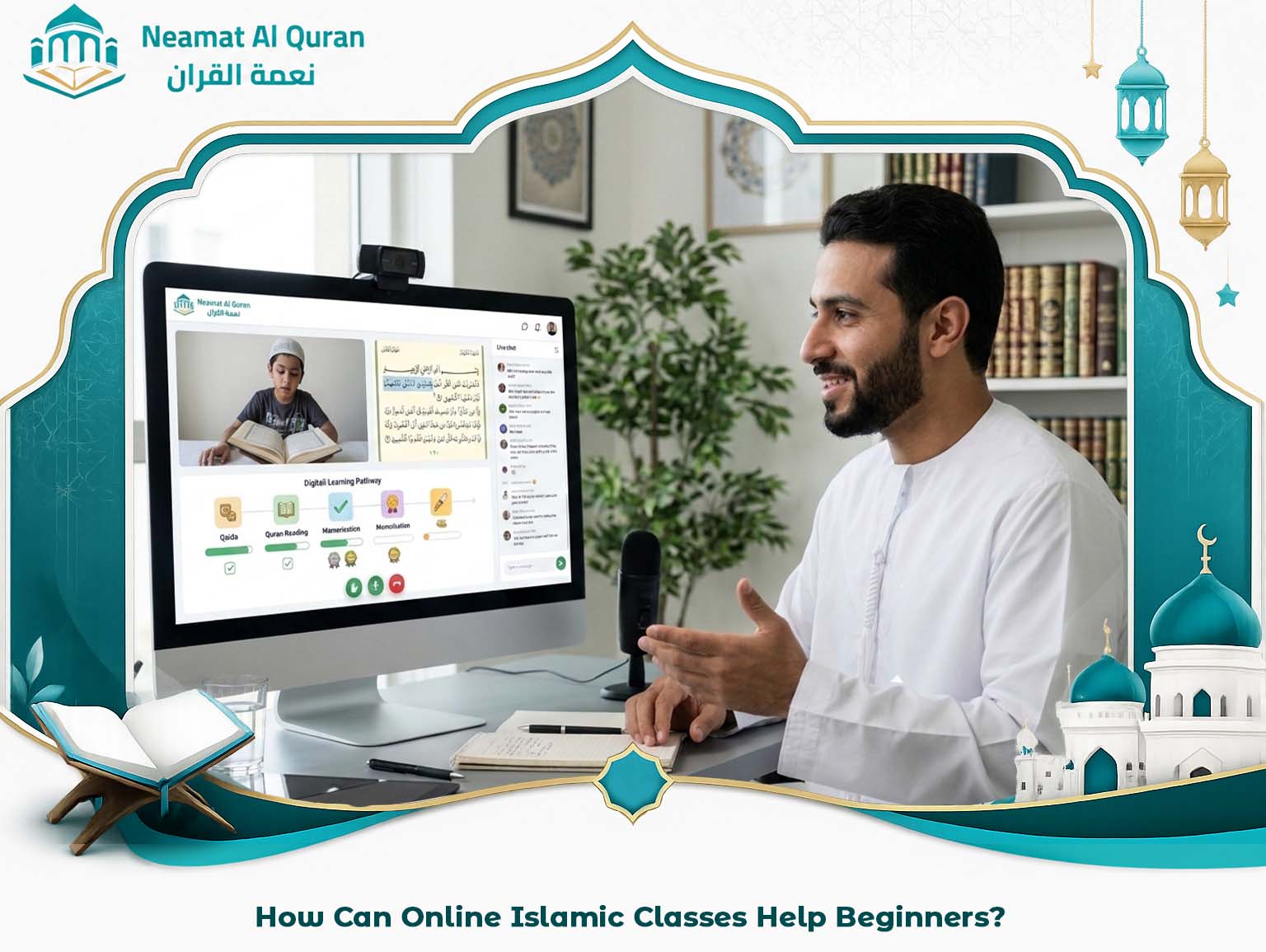
Online learning has made Islamic education more accessible to Muslims living in countries such as the United States, Canada, and the United Kingdom.
Students can attend lessons from home, communicate with teachers, and organize their schedules around work, school, and family responsibilities.
Before choosing a program, it is helpful to understand how does an online quran class work.A suitable online learning program should offer:
-
Clear educational goals.
-
Qualified and experienced teachers.
-
Lessons appropriate for beginners.
-
Opportunities to ask questions.
-
Regular feedback and progress reviews.
-
Flexible scheduling when available.
Neamat Al Quran Academy provides an opportunity for students and families to explore online Quran and Islamic education according to their learning needs.
Additionally, students should review the available curriculum and teaching arrangements before enrolling.
Maintain Motivation Throughout Your Learning Journey
Learning Islam is a continuous process. Some subjects may seem difficult at first, especially for people who are unfamiliar with Arabic or have limited previous Islamic education.
Nevertheless, small and consistent efforts can make a meaningful difference.
Here are practical ways to maintain motivation:
-
Set one achievable learning goal each week.
-
Keep notes about important lessons.
-
Practice Quran reading regularly.
-
Apply Islamic manners in daily interactions.
-
Discuss what you learn with family members.
-
Celebrate progress without rushing to advanced subjects.
Moreover, remember that asking questions is a natural part of learning. A good teacher should encourage understanding rather than expect students to know everything immediately.
Neamat Al Quran Academy can be one option for learners seeking structured guidance as they develop their Islamic knowledge.
Frequently Asked Questions About How to Learn Islam
Find clear answers to common questions about how to learn Islam, including where beginners should start, the importance of Arabic, daily study routines, and choosing reliable online Islamic learning resources.
1. How should a beginner start learning Islam?
Beginners wondering how to learn islam religion should start with Tawheed, the Five Pillars of Islam, basic Quran reading, and the correct way to perform Salah. Studying these subjects gradually provides a strong foundation.
2. Can I learn Islam without speaking Arabic?
Yes. Understanding how to learn islam religion does not require speaking Arabic fluently. Beginners can study Islamic beliefs, worship, and manners in their native language. However, learning basic Arabic helps Muslims read the Quran and understand Islamic terminology more effectively.
3. How much time should I spend learning Islam every day?
There is no single schedule for everyone. Starting with 20–30 minutes daily is a practical approach for anyone exploring how to learn islam religion. Consistency and understanding are more important than studying for long hours occasionally.
4. Are online Islamic classes suitable for beginners?
Yes. Online classes can provide structured lessons, teacher guidance, and opportunities to ask questions. They are particularly useful for people interested in learning Islam from home. However, students should choose reliable programs with qualified instructors and clear educational objectives.
5. What are the best resources for learning Islam?
Reliable Quran translations, authentic Hadith collections, recognized Islamic books, and lessons with qualified teachers are valuable resources. Choosing trustworthy materials is an essential part of how to learn islam religion correctly and gradually.
Conclusion
Understanding how to learn islam religion begins with studying the fundamental beliefs, learning the Quran, understanding Salah, and exploring the teachings of Prophet Muhammad (peace be upon him). Rather than rushing through different subjects, beginners should follow a clear learning plan and practice what they study.
With reliable resources, qualified teachers, and consistent effort, Muslims can strengthen their knowledge and develop a deeper understanding of their faith.
Neamat Al Quran Academy offers an opportunity to explore Quran and Islamic learning through online educational programs. Start with the subjects that match your current level and take steady steps toward building a stronger connection with Islam.