
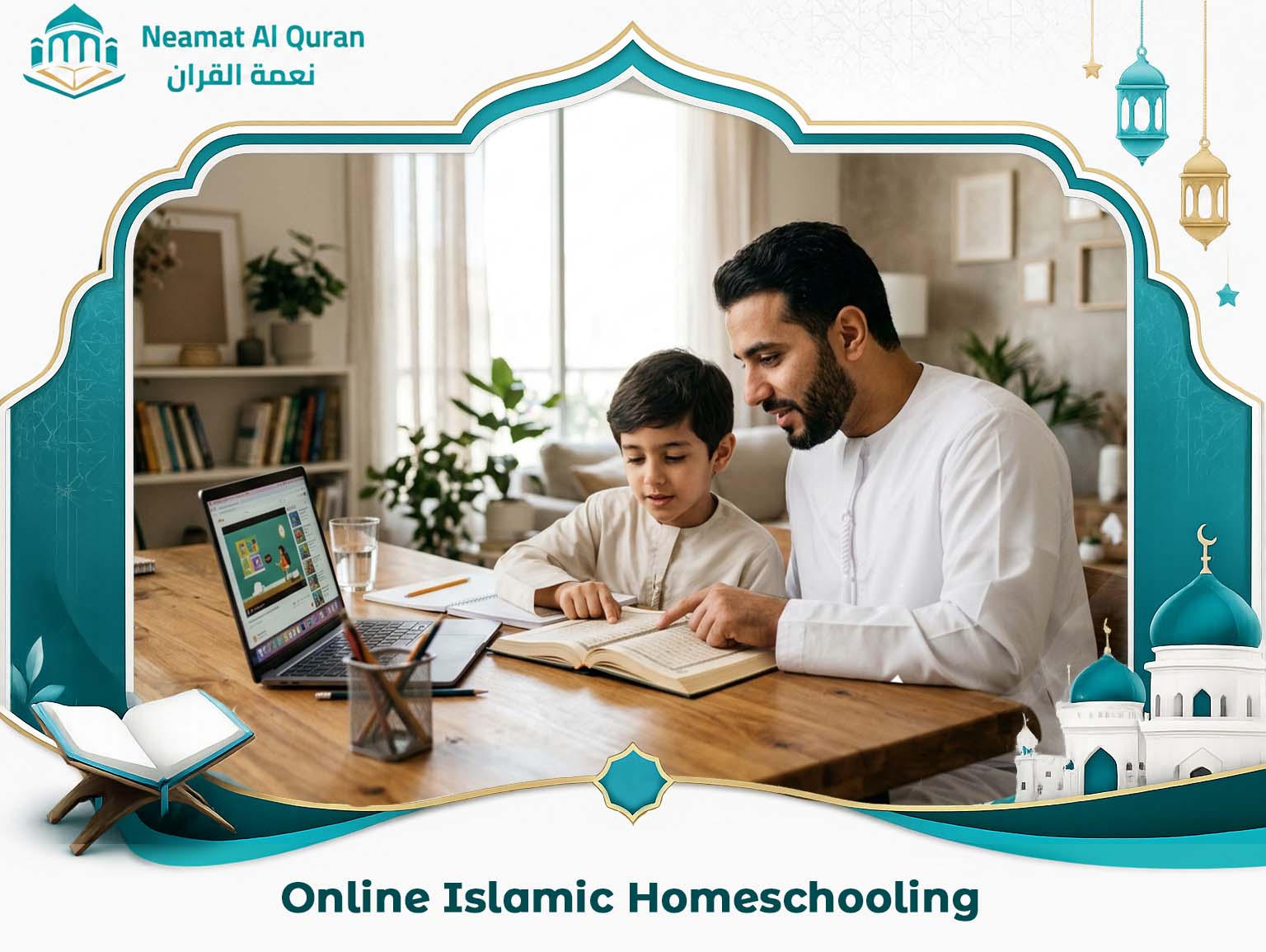
Online Islamic homeschooling offers Muslim families a practical way to combine academic education with Quran learning, Islamic studies, and daily religious values. For parents in the United States, the United Kingdom, and Canada, this approach can make it easier to create a learning environment that respects family beliefs while meeting children’s educational needs.
Instead of separating religious education from everyday learning, online Islamic homeschooling allows parents to include Islamic teachings in their children’s regular routines. With suitable resources, qualified teachers, and a structured schedule, families can build an educational experience that supports both academic development and Islamic identity.
What Is Online Islamic Homeschooling?
Online Islamic homeschooling is an educational approach that combines home-based academic learning with structured Islamic education through digital platforms and online resources.
Children can study subjects such as mathematics, science, English, and history while also learning the Quran, Arabic, Islamic manners, and basic principles of faith.
Parents usually organize the learning schedule and select suitable educational materials. They may also work with online teachers who provide specialized lessons in Quran recitation, memorization, and Islamic studies.
This arrangement gives families more control over educational priorities while allowing children to learn at a pace that suits their abilities.
Why Are Muslim Families Choosing Online Islamic Homeschooling?
Many Muslim parents want their children to receive a balanced education that includes both academic knowledge and religious guidance. Online learning provides several opportunities to achieve this goal.
1. Maintaining Islamic Values at Home
One important reason families choose online Islamic homeschooling is the ability to make Islamic values part of everyday life.
Children can learn about honesty, kindness, respect for parents, and responsibility through practical activities and age-appropriate Islamic lessons.
Parents can also connect these values to daily situations, helping children understand how Islamic teachings influence their behavior.
2. Flexible Learning Schedules
Traditional school schedules do not always match the needs of every family. Homeschooling allows parents to organize lessons around family commitments, prayer times, and children’s learning preferences.
For example, a family in the United States may schedule Quran lessons in the afternoon after regular academic activities. Families in the UK can also arrange online sessions around school-age children’s daily routines.
3. Individual Attention
Children do not all learn at the same speed. Some may understand new concepts quickly, while others need additional explanation and practice.
A flexible learning environment gives parents more opportunities to identify learning difficulties and provide appropriate support.
What Subjects Should an Islamic Homeschooling Program Include?
A successful educational plan should cover academic subjects and Islamic learning without placing unnecessary pressure on children.
Quran Reading and Memorization
Quran education is an essential part of many Muslim homeschooling programs. Children can begin with Arabic letters, pronunciation, and basic reading skills before progressing to longer Surahs.
Parents looking for structured lessons can explore Quran Classes for Kids in the USA to understand how online Quran instruction can support children’s learning.
Memorization should be introduced gradually. Short daily sessions, repetition, and regular revision often work better than expecting children to memorize large portions at once.
Arabic Language and Tajweed
Learning Arabic helps children recognize Quranic vocabulary and understand the language of Islamic worship.
Tajweed lessons can introduce correct pronunciation and recitation rules as children’s reading abilities improve.
Understanding the benefits of learning quran with Tajweed can help parents appreciate why accurate recitation deserves attention from the beginning.
Islamic Studies and Tafseer
Islamic studies introduce children to essential topics such as the pillars of Islam, the life of Prophet Muhammad ﷺ, Islamic manners, and the stories of earlier prophets.
As children grow older, parents can introduce simple explanations of Quranic meanings. Learning what is tafseer helps families understand how Quranic verses can be explained through their meanings, context, and traditional interpretation.
General Academic Subjects
Religious education should complement, not replace, academic learning.
A balanced homeschooling plan may include:
-
Mathematics and problem-solving.
-
English reading and writing.
-
Science and nature studies.
-
History and geography.
-
Computer skills and digital literacy.
-
Creative activities and physical exercise.
Combining these subjects helps children develop knowledge and practical abilities while maintaining a connection with their faith.
How to Create an Effective Online Islamic Homeschooling Schedule?
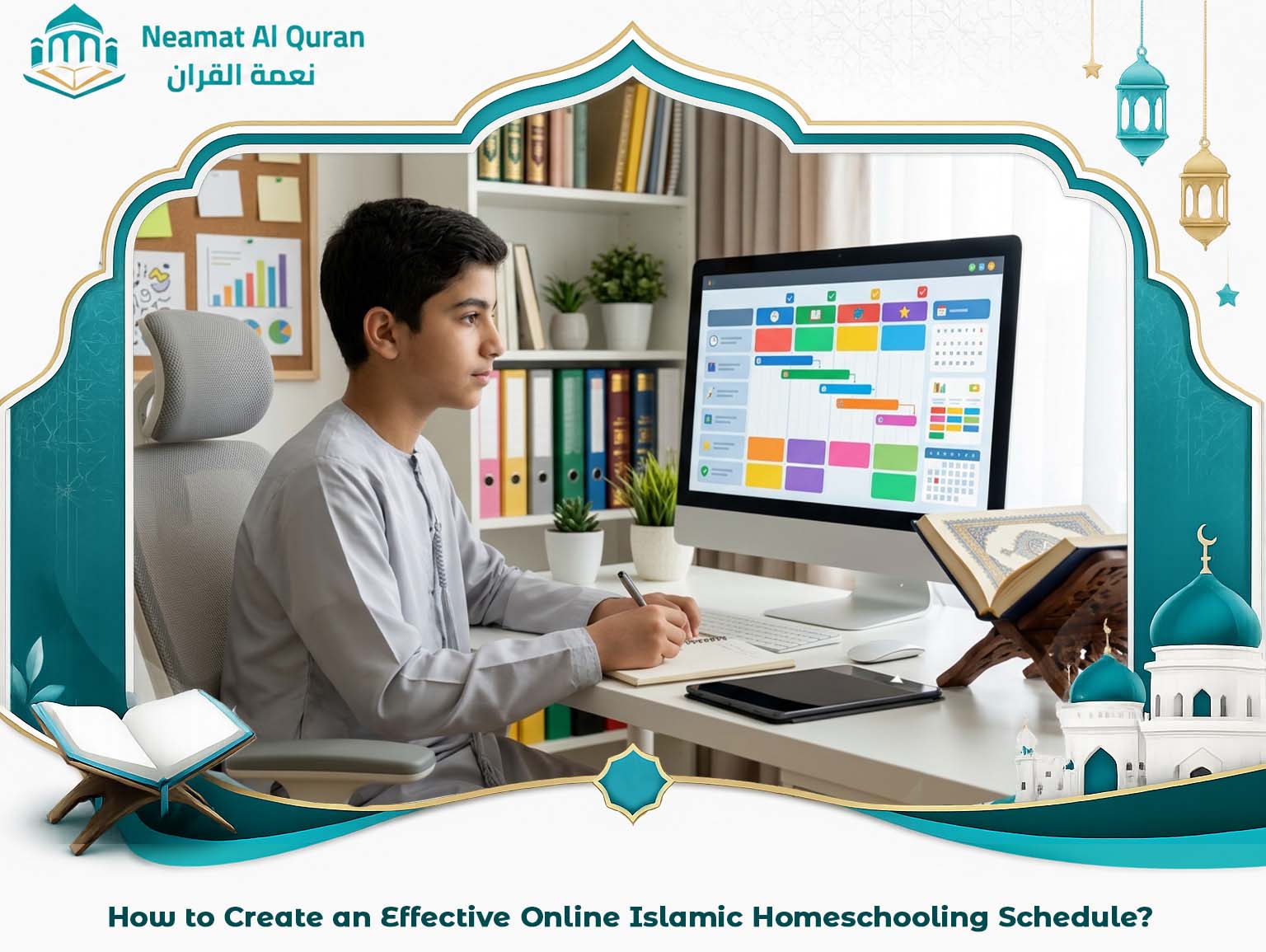
A realistic schedule makes learning easier for children and parents. It should provide structure without making every hour feel like a classroom lesson.
Set Clear Daily Learning Goals
Start by identifying what children should achieve each day. Goals may include completing a mathematics lesson, reading a chapter, memorizing a few Quranic verses, or reviewing an Islamic topic.
Keep expectations appropriate for the child’s age and concentration level.
Divide Lessons Into Manageable Sessions
Young children generally benefit from shorter learning periods with breaks between activities. Older students may manage longer sessions depending on their needs.
A practical daily routine could include:
| Activity | Suggested Time |
|---|---|
| Quran reading and revision | 20–30 minutes |
| Mathematics | 40 minutes |
| English or language studies | 40 minutes |
| Science or history | 40 minutes |
| Islamic studies | 20–30 minutes |
| Physical activity | 30 minutes |
These are suggested durations, not strict requirements. Parents can adjust them according to their children’s ages and school obligations.
Include Regular Quran Revision
Memorization requires consistency. Children should revisit previously learned verses rather than focusing only on new material.
Although many parents search for quran memorization tips for adults, several general principles, including repetition, realistic goals, and scheduled revision, can also help older children develop better memorization habits.
How Can Online Quran Teachers Support Homeschooling?
Parents may understand the importance of Quran education but feel unsure about teaching correct pronunciation, Tajweed, or memorization techniques.
Working with a qualified online Quran teacher can provide children with specialized instruction and regular feedback.
Neamat Al Quran Academy is one option parents can explore when looking for online Quran education. Families can review the available teaching arrangements and determine whether the lessons match their children’s ages, levels, and schedules.
A teacher may help students with:
-
Recognizing Arabic letters and reading Quranic words.
-
Correcting pronunciation and recitation mistakes.
-
Learning basic Tajweed rules.
-
Memorizing selected Surahs.
-
Reviewing previously memorized passages.
Adults who also want to improve their Quran reading can explore learn to read quran for adults.
The academy can be considered as part of a wider homeschooling plan, while parents remain responsible for organizing their children’s overall education.
Common Challenges of Online Islamic Homeschooling
Although this educational approach offers flexibility, families may face challenges when introducing it.
Managing Screen Time
Spending too much time in front of a screen can affect children’s daily routines. Parents should balance online lessons with reading printed books, outdoor activities, and family interaction.
Keeping Children Motivated
Some children lose interest when lessons become repetitive. Using educational games, storytelling, short projects, and interactive Quran activities can make learning more enjoyable.
Finding Suitable Teachers and Resources
Not every online course matches every child’s needs. Parents should check teacher qualifications, lesson structure, communication methods, and progress evaluation before choosing a program.
Balancing Academic and Religious Education
It is important not to overload children with too many lessons. A manageable routine allows them to develop academically while building a meaningful connection with Islamic teachings.
Why Consider Neamat Al Quran Academy for Your Child’s Quran Education?
Neamat Al Quran Academy can be explored by families who want to include organized Quran lessons in their homeschooling routine.
When evaluating an online Quran program, parents should consider the teaching approach, the child’s current reading level, lesson flexibility, and opportunities for individual feedback.
It is also helpful to discuss learning goals before starting. Some children may need help with Arabic letters, while others may be ready for Tajweed or memorization.
Choosing lessons that match the child’s abilities can make Quran learning more comfortable and encourage steady progress.
Frequently Asked Questions About Online Islamic Homeschooling
Find answers to common questions about online Islamic homeschooling, including suitable starting ages, parental involvement, social development, and ways to track children’s educational progress.
1. At What Age Can Children Start Islamic Homeschooling?
Children can begin age-appropriate Islamic learning from an early age. Simple activities such as learning short Surahs, recognizing Arabic letters, and practicing good manners can introduce basic concepts gradually.
2. Do Parents Need to Be Islamic Scholars to Homeschool Their Children?
No. Parents can organize the learning environment and teach basic Islamic concepts while relying on qualified teachers for specialized subjects such as Quran recitation, Tajweed, and advanced Islamic studies.
3. Can Children Receive Social Interaction While Being Homeschooled?
Yes. Parents can arrange group activities, community programs, sports, educational clubs, and interactions with other homeschooling families to support children’s social development.
Conclusion
Online Islamic homeschooling gives Muslim families an opportunity to combine academic education with Quran learning and Islamic values in a flexible home environment. Its success depends on realistic goals, consistent routines, suitable educational resources, and appropriate teaching support.
Neamat Al Quran Academy is one option families can consider when looking for additional Quran instruction. By creating a balanced plan that respects children’s individual needs, parents can support their academic growth and Islamic education together.