
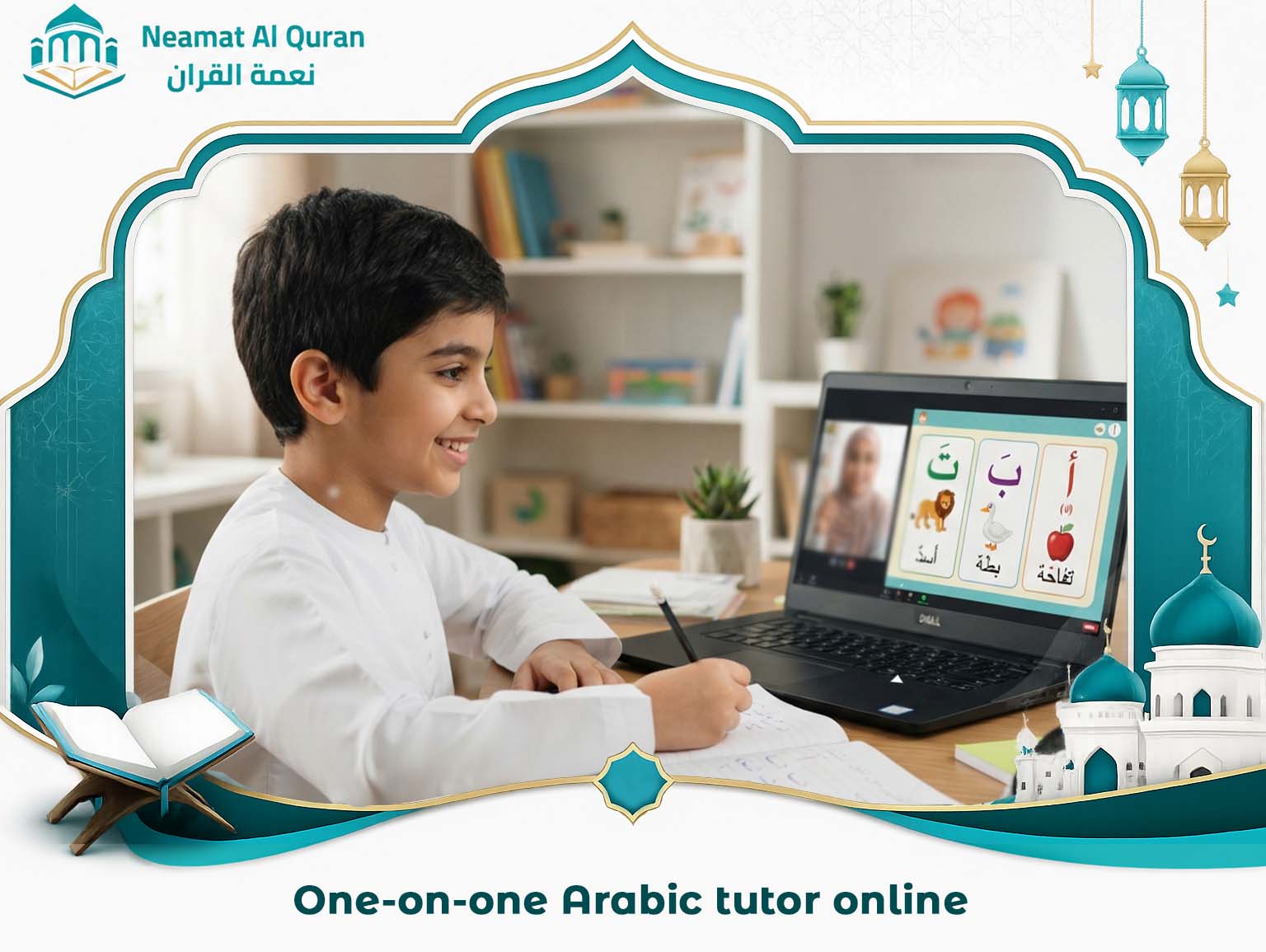
One-on-one Arabic tutor online offers a practical way for students to learn Arabic at their level, goals, schedule, and learning pace. Unlike group classes, private lessons give the teacher full attention to one learner, making it easier to identify weaknesses and provide immediate feedback.
At Neamat Al Quran Academy, students can benefit from personalized Arabic instruction designed around their individual needs. Beginners can receive additional support with the Arabic alphabet, pronunciation, vocabulary, and basic sentences, while intermediate and advanced learners can focus on conversation, grammar, reading, or specialized vocabulary.
A one-on-one learning environment also makes lessons more flexible. Students can practice areas that require extra attention, ask questions freely, and progress without feeling pressured by the pace of a group.
For many learners, online Arabic tutoring is also convenient because lessons can fit around school, work, and family responsibilities. However, choosing the right tutor requires more than comparing prices. Teaching experience, communication skills, Arabic proficiency, lesson structure, availability, and the ability to understand individual goals are all important factors to consider.
Why Choose a One-on-One Arabic Tutor Online?
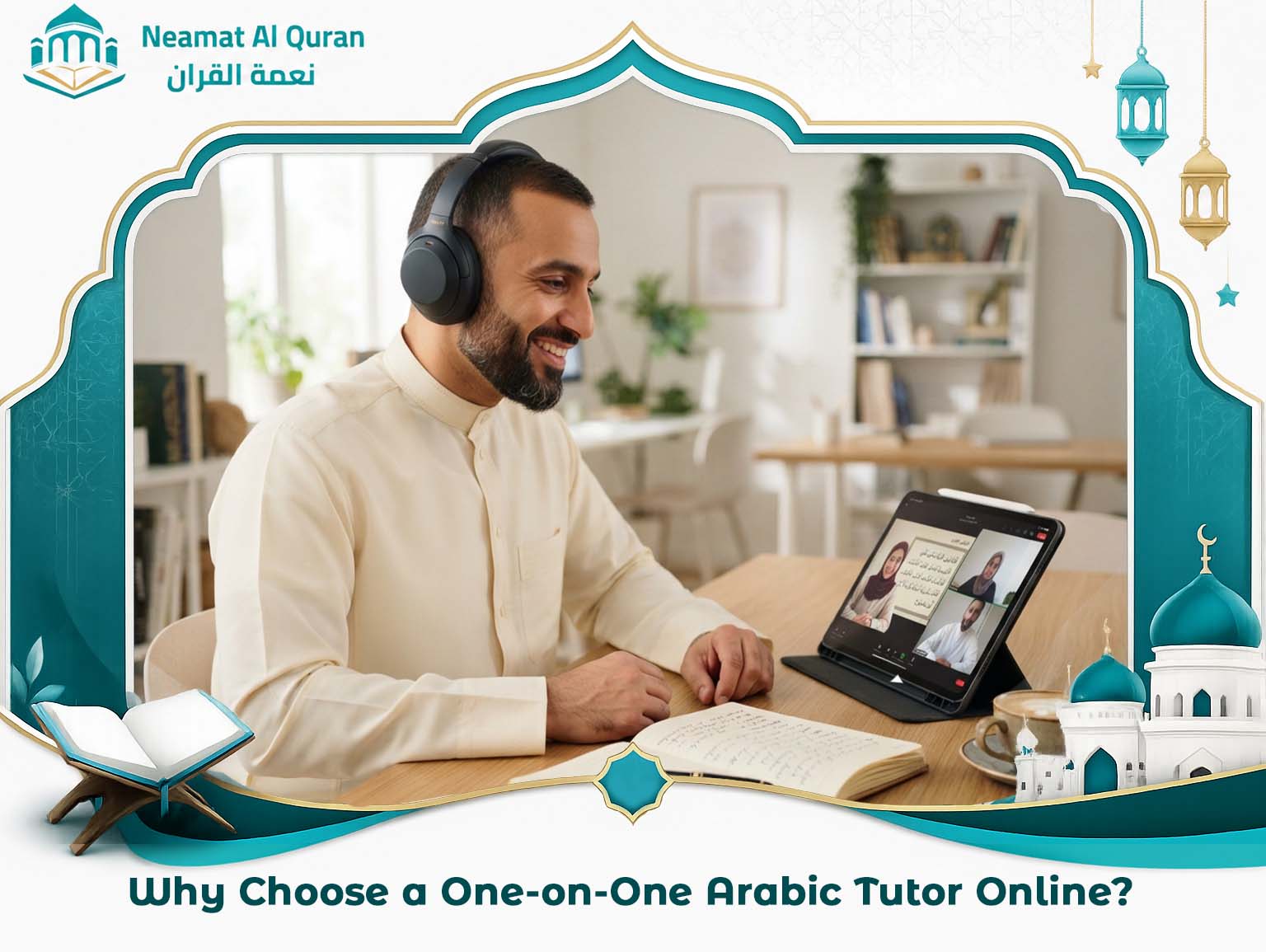
Choosing a one-on-one Arabic tutor online gives students access to a learning environment built around individual needs. Instead of following a fixed classroom schedule, the learner can work with the tutor to determine what should be studied and how quickly the material should be introduced.
This personalized approach can be especially helpful for students who have already tried learning Arabic and felt that their progress was slow. Sometimes the problem is not a lack of ability. The learner may simply be using a method that does not match their needs.
A one-on-one Arabic tutor online can identify those difficulties during lessons. If pronunciation is the main problem, more time can be dedicated to speaking and listening. If grammar is confusing, the tutor can provide additional explanations and exercises. If the learner already has strong reading skills, the teacher can avoid spending unnecessary time on basic material.
The main benefit is direct interaction. The student speaks directly to the teacher, receives immediate feedback, asks questions freely, and practices without competing for attention.
Personalized Learning From the First Lesson
A successful one-on-one Arabic tutor online program usually begins by identifying the student’s current level and objectives.
A tutor may ask questions such as:
- Why do you want to learn Arabic?
- Have you studied Arabic before?
- Can you read Arabic?
- Do you understand spoken Arabic?
- Is speaking or writing your main priority?
- Do you want Modern Standard Arabic or conversational Arabic?
- How much time can you dedicate to practice?
The answers help the tutor design a more appropriate learning path.
For example, someone preparing for a trip may need practical vocabulary and conversation. A student interested in formal Quranic Arabic course online may require more reading and grammar. A child may need engaging activities and frequent repetition, while an adult may prefer structured explanations and realistic conversations.
Personalization means that the learner does not have to spend every lesson studying material they already understand.
Discover the Wisdom of the Quran with Neamat Al Quran Academy
Are you ready to go beyond simple recitation and understand the true guidance of the Quran in your daily life? At Neamat Al Quran Academy, qualified teachers help students explore the meanings of the Quran clearly and practically, which strengthens their faith.
Through structured online lessons, learners improve their understanding and apply Quranic teachings in real situations. Each class encourages reflection, growth, and a deeper connection with Allah’s words. Start your journey today with Neamat Al Quran Academy and build a stronger relationship with the Quran.

How a One-on-One Arabic Tutor Online Can Improve Speaking?
Speaking is one of the strongest reasons to consider a one-on-one Arabic tutor online. Many learners can recognize Arabic words when they hear them but struggle to use those words in a conversation.
Private Quran tutor online lessons provide frequent opportunities to speak. The tutor can ask questions, create realistic situations, introduce vocabulary, and encourage the student to form complete responses.
A beginner might practice introducing themselves, talking about family members, ordering food, or describing a daily routine. An intermediate learner might discuss travel, education, work, hobbies, or current interests. Advanced students can participate in longer conversations that require more precise vocabulary and natural expressions.
The important point is that speaking becomes an active part of the lesson rather than an occasional activity.
A one-on-one Arabic tutor online can also adapt conversations to the student’s interests. If a learner enjoys football, for example, the tutor can introduce vocabulary related to sports. Someone interested in business can practice professional conversations. A traveler can rehearse situations that may occur during a trip.
This makes speaking practice more relevant and easier to remember.
Immediate Feedback Makes a Difference
Another advantage of a one-on-one Arabic tutor online is immediate correction. When students study alone, they may repeat the same pronunciation or grammar mistake without realizing it. During a private lesson, the tutor can identify the problem immediately and provide another example.
Pronunciation is particularly important in Arabic because several sounds may be unfamiliar to learners. A teacher can demonstrate how a sound is produced, allow the student to repeat it, and provide further correction when necessary.
Correction should remain constructive. The purpose is not to interrupt every sentence but to help the learner recognize serious mistakes while maintaining confidence.
A skilled tutor knows when to correct immediately and when to allow the student to finish speaking before discussing the error.
Who Can Benefit From a One-on-One Arabic Tutor Online?
A one-on-one Arabic tutor online can work well for students at different ages and ability levels. Private lessons are flexible enough to accommodate different learning objectives.
Beginners
Complete beginners can start with the Arabic alphabet, pronunciation, basic vocabulary, and simple sentences.
The tutor can introduce new concepts gradually and make sure the learner understands each stage before moving forward.
Beginners should not feel pressured to memorize large amounts of material immediately. A strong foundation often produces better long-term results.
Children
Children may benefit greatly from a one-on-one Arabic tutor online because the teacher can adjust activities according to the child’s attention span and learning style.
A private lesson may combine reading, listening, repetition, questions, pictures, and simple conversations. The tutor can also repeat a difficult concept without making the child feel that they are holding back an entire class.
Parents should pay particular attention to the tutor’s patience and teaching style. A teacher may have excellent Arabic skills but still need the right approach to keep a young learner interested.
Adults
Adults often have specific reasons for studying Arabic. They may want to communicate with relatives, travel, work, study, or develop a personal interest.
A one-on-one Arabic tutor online arrangement allows the lesson plan to focus on those objectives. An adult who needs conversational skills should not necessarily spend most of every lesson studying advanced grammar. Likewise, someone preparing for academic work may require more formal reading and writing.
Heritage Learners
Some learners grew up hearing Arabic but did not receive formal instruction in reading and writing.
A one-on-one Arabic tutor online can help these learners build on what they already know. The teacher can identify existing knowledge and avoid starting from the very beginning when it is unnecessary.
The tutor can then focus on the areas that require development, such as reading, spelling, grammar, vocabulary, or speaking confidence.
Advanced Students
Private tutoring is not only for beginners. An advanced learner may need a One-on-One Quran Classes Online to refine pronunciation, improve fluency, expand vocabulary, practice formal Arabic, or develop specialized language skills.
At higher levels, small mistakes can become more difficult to identify independently. Personalized feedback can help the learner move toward greater accuracy and natural communication.
How to Find the Right One-on-One Arabic Tutor Online?
Finding the right one-on-one Arabic tutor online requires more than choosing the first available teacher. Begin by identifying your primary objective. Decide whether you want to focus on speaking, reading, writing, grammar, pronunciation, formal Arabic, or everyday communication. Once your goal is clear, compare tutors according to several important factors.
Arabic Proficiency
The tutor should have a strong command of Arabic and be able to explain the language clearly. Native-level Arabic can be particularly valuable for pronunciation and natural expressions. Nevertheless, knowing Arabic does not automatically mean someone knows how to speak Arabic to teach it. Teaching ability matters just as much.
Teaching Experience
An experienced one-on-one Arabic tutor online is more likely to recognize common learner difficulties. Ask whether the teacher has worked with students at your level and whether they have experience teaching learners with similar goals.
A tutor who regularly works with beginners may use a very different approach from one who specializes in advanced conversation.
Communication Skills
Online teaching depends heavily on communication. The tutor should be able to explain unfamiliar concepts clearly and answer questions patiently. Beginners may need occasional explanations in English or another familiar language before gradually increasing their Arabic exposure.
Lesson Structure
A productive one-on-one Arabic tutor online lesson should have a purpose. A typical session might begin with a short review, continue with new material, include guided practice, and finish with speaking or comprehension activities.
Structure does not mean that the lesson has to feel rigid. The teacher should still be able to respond when the learner needs additional explanation.
Availability
Consistency is essential. Before selecting a tutor, make sure the available lesson times fit your routine. A highly qualified teacher may not be the best option if their schedule makes regular attendance difficult. Regular lessons usually provide a stronger foundation than occasional sessions separated by long gaps.
What Should You Expect From a One-on-One Arabic Tutor Online?

A one-on-one Arabic tutor online lesson generally takes place through a video call. Depending on the teacher and learning arrangement, different video platforms may be used. The exact lesson format can vary, but an effective session usually has several stages.
The lesson may begin with a short review of previously learned material. The tutor can then introduce the new topic and provide examples.
After that, the learner practices. This is where private tutoring becomes particularly useful because the teacher can listen carefully and provide individualized feedback. The lesson may finish with a summary and recommendations for practice before the next session.
A 55-minute session can provide enough time for explanation, interaction, practice, and feedback without becoming unnecessarily long.
Building a Successful One-on-One Arabic Tutor Online Routine
Finding a one-on-one Arabic tutor online is only the beginning. Progress also depends on what happens between lessons. A student who reviews vocabulary for a few minutes each day can often benefit more from lessons than someone who attends a class but never practices afterward.A simple routine can include several habits.
Review Before the Next Lesson
Spend a few minutes reviewing previous material. Read vocabulary aloud, revisit difficult grammar, and create new sentences using recently learned expressions. Short and consistent review is usually easier to maintain than occasional long study sessions.
Keep a Vocabulary Notebook
Write down useful words and expressions. Include example sentences rather than memorizing isolated vocabulary. This makes it easier to understand how words are used in context.
Speak Outside the Lesson
Use Arabic whenever possible. Describe your daily routine aloud. Practice introducing yourself. Name objects around you. Repeat useful phrases from previous lessons. The purpose is to make Arabic something you actively use rather than simply study.
Ask Questions
A good one-on-one Arabic tutor online should encourage questions. If a grammar rule is unclear, ask for another explanation. If two words seem similar, ask about the difference. If pronunciation remains difficult, request additional practice. Questions help the tutor understand where the learner needs more support.
Choosing a One-on-One Arabic Tutor Online for Children
Parents should evaluate a one-on-one Arabic tutor online differently from adult learners. A tutor may have excellent language knowledge but still struggle to keep a young child engaged. Patience, teaching style, and the ability to simplify explanations are especially important.
A suitable teacher should understand that children need repetition and encouragement. They may also require shorter activities and frequent interaction. The lesson should feel structured without becoming overwhelming.
Keep Lessons Age Appropriate
A child should not be expected to spend an entire lesson listening to a long grammar explanation. Instead, lessons can combine reading, listening, repetition, questions, pictures, and simple conversations. The goal is to build familiarity with Arabic gradually.
Encourage Without Pressure
Children often respond better when learning feels achievable. Parents can support the process by creating a consistent routine and recognizing effort rather than focusing only on immediate results.
How Does Neamat Al Quran Academy Approach Online Arabic Learning?
For families seeking structured online learning, Neamat Al Quran Academy can be considered an option for personalized Arabic instruction.
A private learning model allows the teacher to understand the student’s current level before determining what should come next. Rather than giving every learner identical material, the teacher can focus on the skills that need the most attention.
At Neamat Al Quran Academy, personalized instruction can help connect weekly lessons with specific learning objectives.
A student using a one-on-one Arabic tutor online should have opportunities to listen, speak, read, and use Arabic instead of relying exclusively on memorization.
For children, parents can also benefit from communication about areas that require additional practice. For adults, lessons can be organized around individual goals and existing language ability. The strongest learning experience combines teacher guidance with regular independent practice.
One-on-One Arabic Tutor Online vs. Group Classes
A one-on-one Arabic tutor online offers a different experience from a traditional group class. Group classes can provide social interaction and allow students to learn the Arabic alphabet for Quran reading alongside others.
However, each student receives only part of the teacher’s attention. With private tutoring, the teacher’s attention remains focused on one learner.
| Learning factor | Private online lesson | Group class |
|---|---|---|
| Individual attention | Very high | Limited |
| Speaking opportunities | Frequent | Shared |
| Personalized pace | Yes | Usually fixed |
| Schedule flexibility | Often high | Depends on timetable |
| Immediate correction | Strong | More limited |
| Customized materials | Easier | Less flexible |
| Social interaction | Teacher-focused | More classmates |
Neither approach is automatically best for everyone. A learner who enjoys group interaction may prefer a classroom. Someone who needs targeted feedback or has a very specific goal may benefit more from private lessons.
One-on-One Arabic Tutor Online for Different Arabic Goals
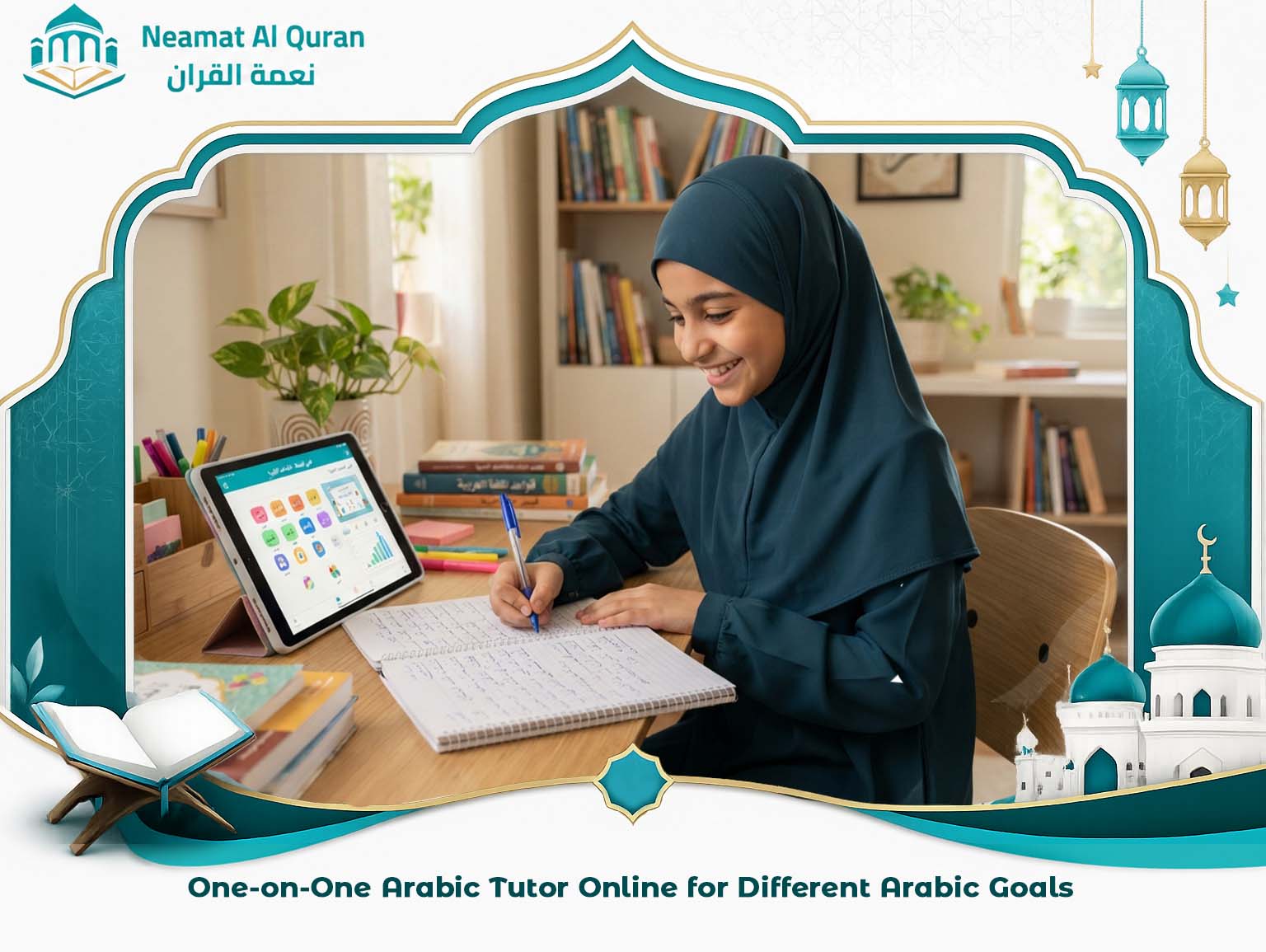
A one-on-one Arabic tutor online can adapt lessons to different reasons for learning Arabic. Some students want Modern Standard Arabic for reading and formal communication. Others want everyday conversation or exposure to a particular dialect. Your objective should influence the type of teacher you choose.
Modern Standard Arabic
Modern Standard Arabic is widely used in formal writing, education, news, and many professional contexts. Students interested in these areas may need structured lessons covering grammar, vocabulary, reading, and comprehension.
Conversational Arabic
Learners who want everyday communication may prioritize listening and speaking. Lessons can focus on common expressions, natural responses, pronunciation, and realistic situations.
Arabic for Travel
A one-on-one Arabic tutor online can create role-play activities based on travel situations. These may include airports, hotels, restaurants, transportation, shopping, and introductions.
Arabic for Work
Professional learners may require vocabulary related to meetings, presentations, emails, customer communication, or a specific industry. Private tutoring makes it easier to customize these areas around the learner’s professional needs.
How Much Practice Do You Need?
There is no single number of hours that guarantees fluency. Progress depends on starting level, study habits, goals, exposure to Arabic, and consistency.
A practical routine can include:
- One or two private lessons each week
- Short daily vocabulary review
- Speaking exercises
- Reading simple Arabic texts
- Listening practice
- Weekly review of previous lessons
Even a short amount of daily practice can reinforce what was learned during a one-on-one Arabic tutor online lesson. The key is sustainability. A routine that fits your life is more valuable than an ambitious schedule that cannot be maintained.
How Can Neamat Al Quran Academy Support Consistent Progress?
A strong tutoring relationship depends on consistency, communication, and appropriate lesson planning. Neamat Al Quran Academy can serve learners who prefer structured learning while still benefiting from individualized instruction.
Students should understand what they are learning and why they are learning it.
Instead of setting a vague goal such as “learn Arabic,” a student can establish smaller objectives:
- Introduce yourself confidently.
- Understand basic questions.
- Read short Arabic sentences.
- Use common verbs correctly.
- Hold a short conversation.
- Understand frequently used vocabulary.
- Improve difficult pronunciation.
These goals make progress easier to recognize.
At Neamat Al Quran Academy, a one-on-one online Arabic tutor online format can also allow the teacher to revisit areas where the student is struggling instead of moving forward according to a fixed calendar.
This matters because learners do not all progress at the same speed.
Common Mistakes When Choosing an Online Arabic Tutor
Students sometimes select a tutor based only on price. Cost is important, but the cheapest lesson is not necessarily the best value. If the student receives little feedback or follows an unsuitable program, saving money may result in slower progress. Another mistake is choosing a one-on-one Arabic tutor online without first defining a learning goal.
Without a clear objective, lessons can become a collection of unrelated topics. A better approach is to establish priorities before the first regular lesson.
Some learners also expect immediate fluency. Language learning requires time, repetition, and practice. The tutor provides guidance, but the learner must participate actively.
Changing tutors too frequently can also make progress harder to evaluate. It may take several lessons to understand a teacher’s method and establish a comfortable learning relationship.
How to Know Whether Your Arabic Lessons Are Working?
Progress is not measured only by the number of lessons completed. Ask yourself practical questions. Can you understand words that previously seemed unfamiliar? Can you create sentences more quickly? Are pronunciation mistakes becoming less frequent? Can you read with greater confidence?
A one-on-one Arabic tutor online can also help you measure progress through regular feedback and small learning goals.
One useful method is to record yourself answering the same questions every few weeks. Comparing recordings can reveal improvements that are difficult to notice from day to day.
A successful program does not mean that the student never makes mistakes. It means mistakes gradually become less frequent, understanding improves, and communication becomes easier.
The Role of Technology in Private Arabic Lessons
Technology has made a one-on-one Arabic tutor online arrangement accessible to learners who may not have a suitable Arabic teacher nearby.
A stable internet connection, microphone, webcam, and appropriate device are generally enough for a basic online lesson.
Digital tools can also support learning outside the live session. Students may use shared documents, flashcards, audio recordings, online dictionaries, and digital reading materials.
However, technology should remain a tool. The most important part of the lesson is still the interaction between teacher and student.
One-on-One Arabic Tutor Online for Long-Term Fluency
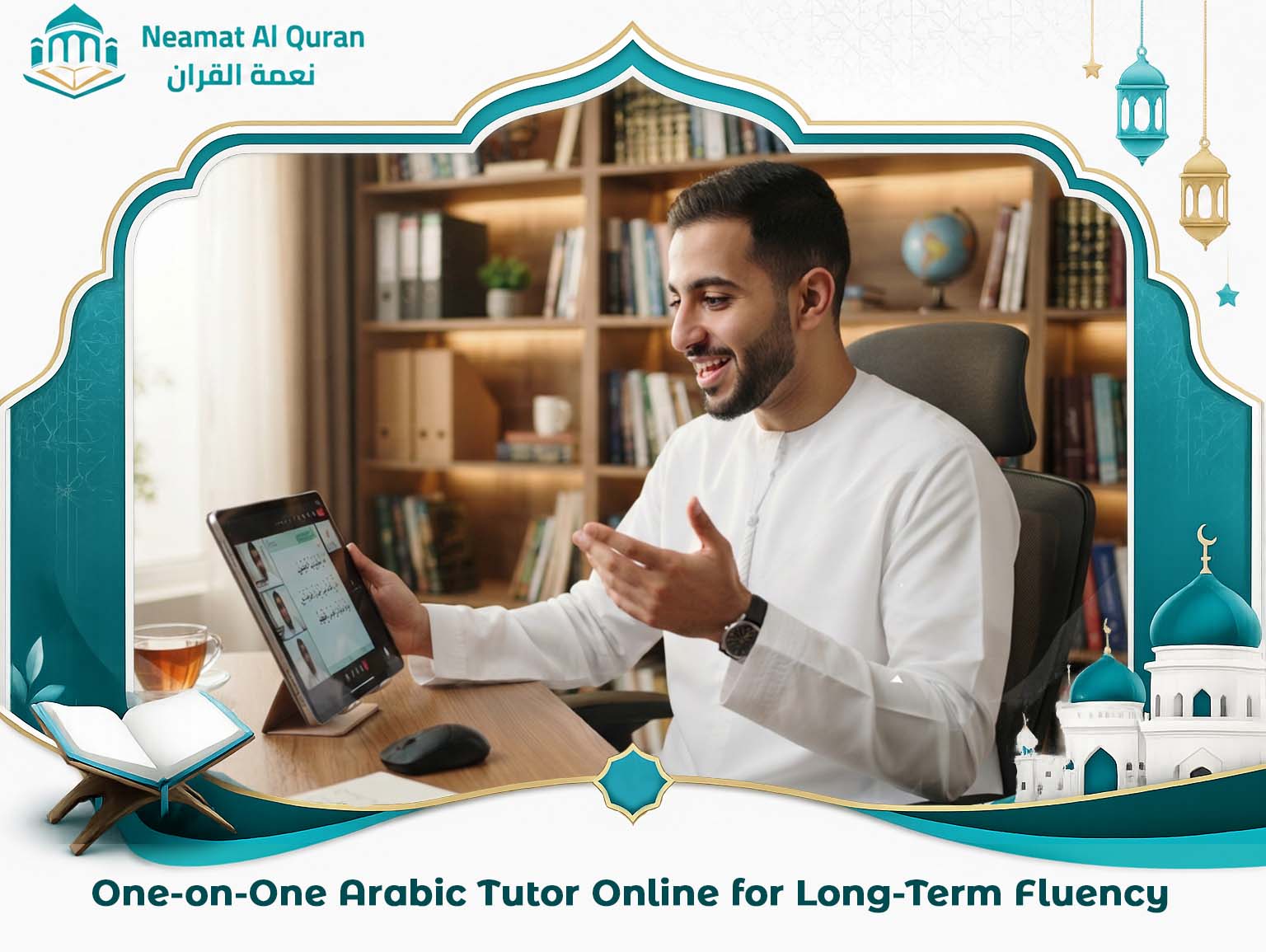
Fluency develops gradually. At the beginning, learners may focus on individual sounds, letters, and basic vocabulary. Later, attention shifts toward sentence structure and comprehension.
Intermediate learners often need more conversation and vocabulary. Advanced learners may focus on precision, natural expression, and specialized language.
A one-on-one Arabic tutor online can adjust the learning plan as these needs change. This flexibility means that the student does not have to follow the same lesson structure forever.
At Neamat Al Quran Academy, learners can approach Arabic as a long-term skill rather than simply a short course. The best results usually come when the learner and tutor review goals periodically and adjust the learning plan when necessary.
Frequently Asked Questions
The Frequently Asked Questions section answers common questions about choosing and learning with a one-on-one Arabic tutor online.
Is a one-on-one Arabic tutor online suitable for complete beginners?
Yes. Complete beginners can start with the Arabic alphabet, sounds, basic vocabulary, and simple sentence structures. The tutor can adjust the pace according to the learner’s ability.
Can I learn Arabic if I only have a few hours available each week?
Yes. Limited study time can still produce progress when it is used consistently. Regular practice between lessons is especially helpful.
Should I study Modern Standard Arabic or an Arabic dialect first?
It depends on your objective. Modern Standard Arabic may be suitable for formal reading and writing, while a dialect may be more useful for everyday conversation in a specific region.
How can I stay motivated during a long Arabic learning journey?
Set small goals, track progress, use Arabic in real situations, and choose lesson topics that interest you. Practical improvement can make continued study easier.
Can private Arabic lessons change when my goals change?
Yes. One advantage of private tutoring is flexibility. If your priorities move from reading to conversation, for example, the tutor can adjust future lessons.
In conclusion, choosing a one-on-one Arabic tutor online can make Arabic learning more personal, flexible, and focused. Instead of following a fixed classroom pace, the learner receives direct attention and works on the skills that matter most.
The strongest results come from combining the right teacher with realistic goals, consistent practice, active participation, and regular review.
When comparing tutors, look beyond price. Consider teaching experience, communication style, lesson structure, availability, student feedback, and the tutor’s ability to understand your objectives.
With patience, regular practice, and effective guidance, Arabic can become much more than a subject studied from a textbook. It can become a language that the learner can read, understand, speak, and use with greater confidence.