
What Do We Learn From The Quran? is not just a question people search for; it is a lifelong reflection that shapes how a believer thinks, behaves, and connects with the world. The Quran is not merely a sacred text for recitation; it is a complete way of life that builds character, strengthens faith, and provides practical guidance for everyday decisions.
In essence, the Quran offers a timeless framework for faith, emotions, relationships, and moral behavior. It teaches believers how to stay connected to Allah, how to treat others with justice and mercy, and how to remain strong in times of hardship. It is not theoretical philosophy it is lived wisdom that transforms the heart and mind.
At Neamat Al Quran Academy, this understanding is at the core of every lesson. The focus is not only on reading the Quran correctly but on living by its meanings in daily life.
What Makes the Quran a Complete Guide for Humanity?
The biggest misunderstanding many people have is treating the Quran as a book of rituals or historical stories only. In reality, What Do We Learn From The Quran? shows that it is a divine manual for being human, addressing emotions, relationships, ethics, and decision-making with clarity and balance.
The Quran does not separate spiritual life from daily life; instead, every action, speaking, earning, forgiving, or even thinking, can become an act of worship when done with sincerity.
At Neamat Al Quran Academy, students are encouraged to connect meaning with action, because the true goal is not memorization alone, but transformation into a better, more conscious way of living. Choosing a Quran Hifz academy online gives students access to experienced teachers and comprehensive memorization programs.
Discover the Wisdom of the Quran with Neamat Al Quran Academy
Ready to move beyond recitation and truly understand the Quran’s guidance for everyday life? At Neamat Al Quran Academy, our experienced teachers help students connect with the meanings of the Quran, strengthen their faith, and apply its timeless lessons in daily life.
Join our interactive online classes and begin a journey of knowledge, spiritual growth, and lasting transformation. Enroll today and take your first step toward a deeper relationship with the Quran.
Building a Direct Connection With Allah
One of the first and most powerful lessons the Quran teaches is that there is no distance between the Creator and His servant. Allah is always near, listening, and responding. The Quran clearly states:
“And when My servants ask you concerning Me—indeed I am near. I respond to the call of the caller when he calls upon Me.” (2:186)
This verse changes everything. Worship is no longer a burden; it becomes a personal conversation with the One who knows you best.
Understanding prayer in this way turns it from a routine into a source of peace and emotional grounding. It teaches that anyone can reach Allah directly—no barriers, no intermediaries. For beginners, Tajweed classes online for beginners provide a solid foundation for correct Quran recitation.
Neamat Al Quran Academy emphasizes this meaning in its beginner programs, helping students overcome fear or hesitation when approaching the Quran. Learn Noorani Qaida for kids through simple, step-by-step lessons that build strong Arabic reading and Quran recitation skills.
Justice Even Against Yourself
Among the strongest moral teachings in the Quran is absolute justice. A believer is required to stand for truth even when it is uncomfortable or personally costly. The Quran commands:
“Be persistently standing firm in justice, witnesses for Allah, even if it be against yourselves.” (4:135)
This principle challenges human bias. It is easy to be fair when it benefits us, but true faith requires fairness even when it hurts our ego or interests.
Justice in the Quran is not selective—it is universal. Whether dealing with family, friends, or strangers, honesty must remain the foundation. Explore How To Memorize the Quran? With effective memorization techniques, daily revision, and guidance from qualified Quran teachers.
Understanding Emotional Strength and Hardship
Life is full of emotional ups and downs, and the Quran does not deny that. Instead, it acknowledges sadness, fear, and struggle as part of human experience. One of the most comforting messages in the Quran is:
“Indeed, with hardship comes ease.” (94:5-6)
This verse is repeated to emphasize certainty. Hardship is never permanent, and relief is always part of the equation. Even the prophets experienced deep sorrow and grief, yet they remained connected to Allah. This teaches believers that emotional pain does not mean weak faith—it means being human. The Quran builds resilience, not denial of emotions. Understand the benefits of learning Quran online, including flexible schedules, personalized classes, expert tutors, and convenient learning from home.
Speaking With Kindness and Respect
Words carry great influence, and the Quran strongly emphasizes speaking with kindness, truth, and respect, reminding believers that speech can heal hearts, build relationships, and guide people toward goodness. Many learners decide to learn Tajweed rules online because it offers flexibility and access to qualified instructors.
“And speak to people good [words].” (2:83)
This instruction is simple but transformative. It applies to everyone, regardless of background or belief. Harsh language, insults, and arrogance destroy relationships and spread negativity. A believer is expected to be a source of peace through speech. Even silence, when necessary, is better than harmful words. Find the best way to Hifz Quran by following a structured memorization plan, regular revision, and consistent practice with experienced instructors.
Human Diversity as a Divine Sign
The Quran celebrates human diversity rather than rejecting it. Differences in language, culture, and appearance are signs of Allah’s wisdom.
“We made you peoples and tribes so that you may know one another.” (49:13)
Diversity is not a problem—it is a purpose. It allows humans to learn, grow, and connect. Racism, superiority, and discrimination have no place in Islamic teaching. The value of a person lies in their righteousness, not their appearance or background. Master how to speak Arabic through interactive lessons, daily conversation practice, and gradual vocabulary and grammar development.
The Importance of Family Bonds
Family is a central pillar in Islam. The Quran repeatedly emphasizes kindness toward parents and maintaining strong family relationships.
“And your Lord has decreed that you not worship except Him, and to parents, good treatment.” (17:23)
This verse places respect for parents immediately after worship, highlighting its importance. Even small expressions of irritation are discouraged. Gratitude, patience, and care are essential qualities in family life. A strong society begins with strong families.
Charity and Generosity
The Quran reshapes how believers view wealth, teaching that money is not absolute ownership but a trust from Allah that must be managed responsibly, shared fairly, and used in ways that benefit others.
“The example of those who spend their wealth in the way of Allah is like a seed that grows seven spikes…” (2:261)
Charity is not a loss—it is growth. Giving benefits both the receiver and the giver by purifying the heart and increasing blessings. Generosity includes money, time, and effort. The more a person gives sincerely, the more inner peace they experience. Completing a Tajweed course with a certificate helps students improve their recitation skills while earning recognized credentials.
Knowledge and Intellectual Growth
Islam encourages learning and reflection, and the first revelation began with the command to “Read,” showing that seeking knowledge is a fundamental duty that shapes understanding, faith, and personal growth. The Quran says:
“My Lord, increase me in knowledge.” (20:114)
Seeking knowledge is not optional—it is a responsibility. This includes both religious and worldly knowledge. What Do We Learn From The Quran? At Neamat Al Quran Academy, students are encouraged to ask questions and understand meanings deeply rather than memorizing blindly. Intellect and faith work together, not against each other. Working with an online Tajweed teacher provides personalized guidance to master the rules of Tajweed.
Forgiveness and Letting Go
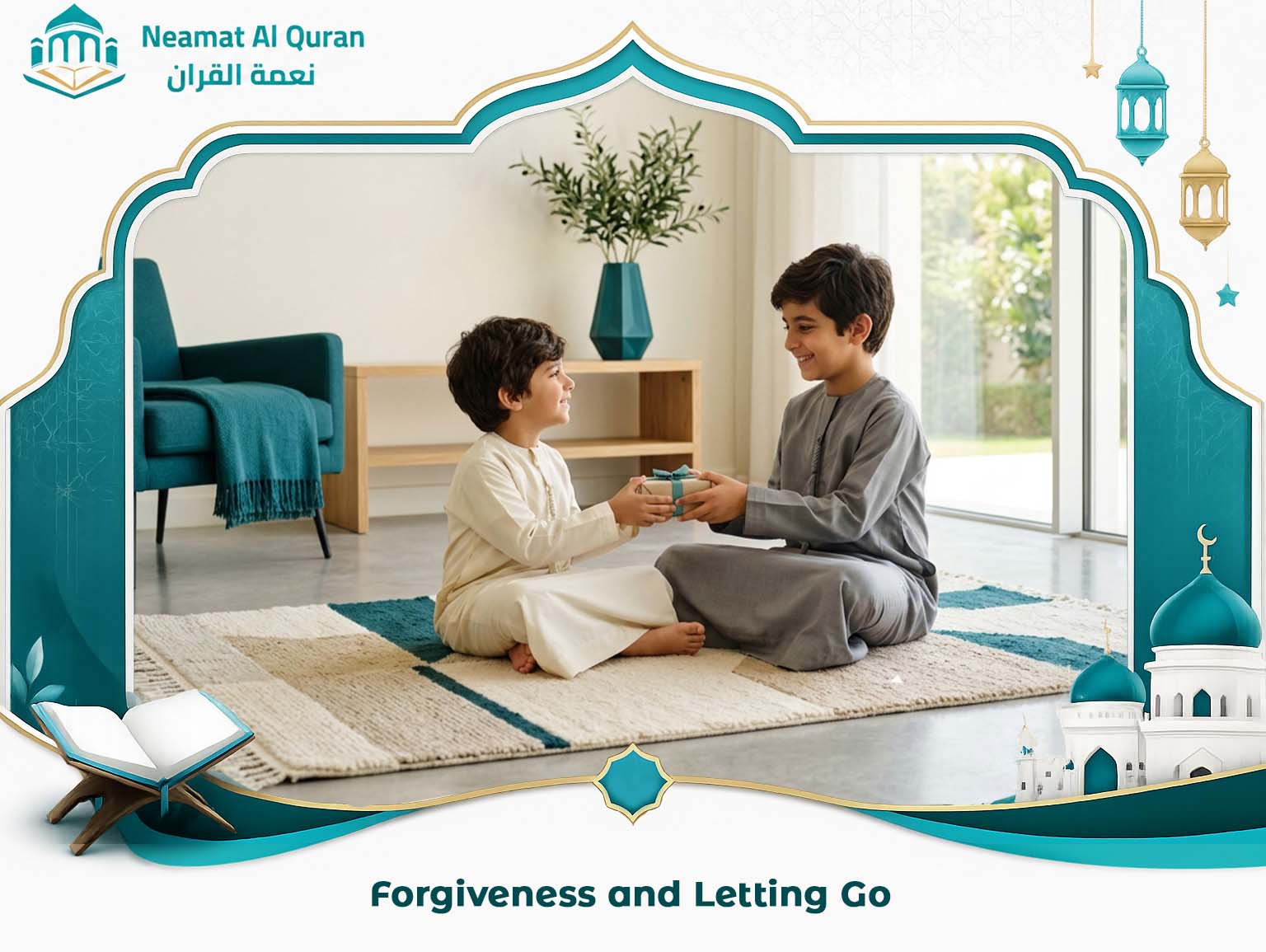
Holding grudges creates emotional weight, and the Quran repeatedly encourages forgiveness as a path to peace, healing the heart, freeing the soul, and restoring harmony in relationships through mercy and understanding.
“Let them pardon and overlook. Would you not like that Allah should forgive you?” (24:22)
This powerful question makes forgiveness personal. If a person wishes for Allah’s mercy, they must also show mercy to others. Forgiveness does not mean weakness—it means emotional freedom.
Modesty and Inner Dignity
The Quran shifts the concept of dignity from appearance to character, teaching that true honor is not found in wealth, beauty, or status, but in righteousness, good conduct, and sincere faith that reflects inner purity and moral strength in everyday life.
“Indeed, the most noble of you in the sight of Allah is the most righteous of you.” (49:13)
True value is measured by Taqwa, awareness of Allah, not wealth or beauty. Modesty in behavior, speech, and appearance protects dignity, preserves inner balance, and builds lasting strength rooted in humility, self-respect, and conscious obedience to Allah in all aspects of life.
Patience as an Active Strength
Patience in the Quran is not passive suffering; it is active endurance paired with trust in Allah, helping believers remain steady, hopeful, and purposeful while facing challenges with strength, faith, and inner resilience that grows through every trial.
“Seek help through patience and prayer.” (2:153)
Patience is a tool for survival and growth, strengthening a believer during trials and keeping them grounded with faith and clarity. Every difficulty carries within it the possibility of spiritual elevation, turning hardship into a path toward deeper understanding and closeness to Allah.
Discipline and Life Choices
The Quran teaches awareness of what we consume mentally and spiritually, guiding believers to choose beneficial knowledge, avoid harmful influences, and protect the heart and mind from distractions that weaken faith and distort moral clarity.
“And of the people is he who buys idle talk to mislead from the way of Allah.” (31:6)
This highlights the importance of protecting time and attention from harmful distractions. Discipline is about consciously choosing what strengthens the heart, focusing on beneficial actions, and avoiding anything that weakens faith, clarity, or personal growth in daily life.
Warning Against Arrogance
Arrogance is one of the most condemned traits in the Quran, and What Do We Learn From The Quran? teaches humility as essential for maintaining balance, avoiding downfall, and staying connected to truth and faith.
“Do not walk upon the earth exultantly.” (17:37)
No matter how successful a person becomes, arrogance leads to downfall. Humility keeps the heart balanced and connected to reality.
Protecting Privacy and Reputation
Backbiting is strongly prohibited in Islam and described in severe terms, and What Do We Learn From The Quran? teaches that protecting others’ dignity and avoiding harmful speech are essential for building trust and strong communities.
“Would one of you like to eat the flesh of his brother when dead?” (49:12)
This imagery shows how harmful gossip truly is. Protecting others’ dignity is part of faith. Respecting privacy builds trust and strengthens communities.
Keeping Promises and Integrity
Faith is directly connected to honesty and commitment, and What Do We Learn From The Quran? teaches that fulfilling promises and being trustworthy are essential qualities that strengthen character, build trust, and reflect true belief in daily life.
“O you who believe, fulfill your contracts.” (5:1)
Breaking promises weakens trust and damages character. Integrity means being reliable in both small and large matters. A believer’s word should be dependable. Neamat Al Quran Academy reminds students that moral behavior is as important as correct recitation.
Hope and Never Despairing
One of the most powerful messages in the Quran is hope. No matter how many mistakes a person has made, mercy is always available.
“Do not despair of the mercy of Allah. Indeed, Allah forgives all sins.” (39:53)
Despair is rejected completely, as What Do We Learn From The Quran? teaches that as long as a person is alive, change is always possible, and hope remains essential for renewal, growth, and returning to Allah with confidence.
How to Apply Quranic Teachings in Daily Life?
-
- Honest behavior
- Kind communication
- Patience in difficulty
- Forgiveness toward others
- Strong moral decisions
When applied, these values transform life into a balanced and meaningful journey, bringing clarity, peace, purpose, and stronger moral character to everyday living. Many adults benefit from Tajweed classes for adults because the lessons are designed to suit their learning pace and schedules.
Frequently Asked Questions
Provide clear and quick answers to common queries, helping readers better understand the topic and find essential information in a simple and organized way.
1. What is the main purpose of the Quran?
The Quran is a complete guide for life, covering worship, ethics, and daily behavior while shaping a believer’s purpose and relationship with Allah.
2. How can I apply Quranic teachings in daily life?
By practicing honesty, kindness, patience, and reflecting Quranic values in everyday actions and decisions.
3. Why is learning the Quran important?
It strengthens faith, builds a direct connection with Allah, and provides guidance for both spiritual and practical life.
In conclusion, the Quran is a complete and timeless guide that shapes every aspect of a believer’s life, from faith and worship to behavior and relationships.
It teaches balance, purpose, and moral clarity while encouraging reflection, patience, and sincerity in daily actions. When its guidance is applied sincerely, it transforms the heart and leads to a life filled with peace, direction, and a strong connection with Allah.