
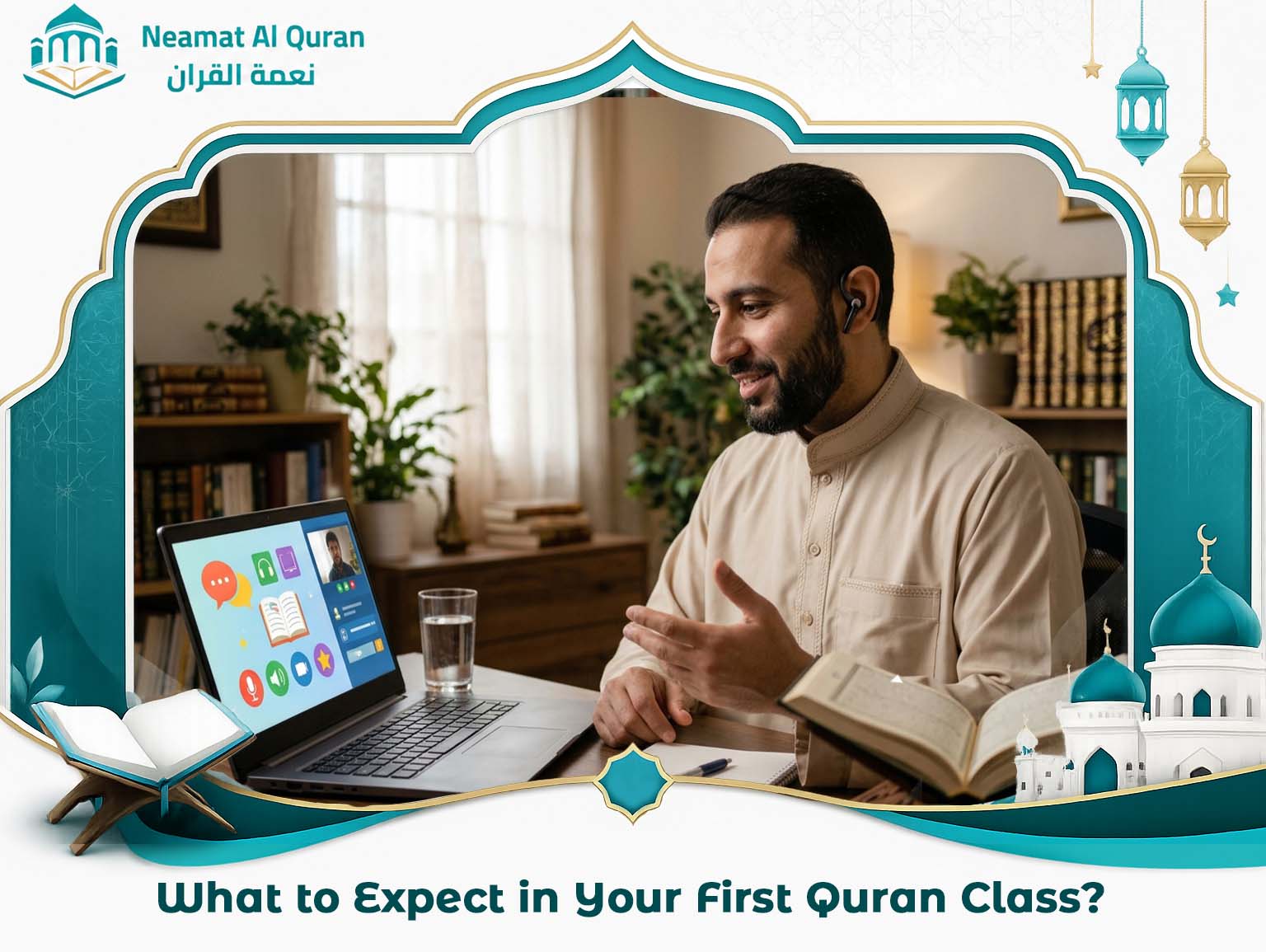
What to expect in your first quran class is a common question for beginners preparing to start their Quran learning journey. Whether you are an adult learning Arabic for the first time or a parent arranging lessons for your child, attending the first session may bring excitement along with a few concerns.
You might wonder whether the teacher will assess your reading skills, explain Arabic letters, introduce Tajweed rules, or ask you to recite Quranic verses. In most cases, the first lesson focuses on understanding your current level, discussing your learning goals, and identifying the right starting point.
Neamat Al Quran Academy is an option to explore when looking for Quran learning opportunities. Understanding how an introductory lesson usually works can help you feel more confident and prepare for a productive learning experience.
Understanding Your Current Quran Reading Level
One of the first things a Quran teacher may do is assess your existing knowledge. This helps determine whether you should begin with Arabic letters, basic pronunciation, Quran reading, or more advanced recitation practice.
The teacher may ask you to:
- Recognize some Arabic letters.
- Read a few simple Arabic words.
- Recite a short Surah if you already know one.
- Explain whether you have studied Tajweed before.
- Share your previous Quran learning experience.
There is no reason to feel embarrassed if you cannot read Arabic yet. Beginners have different levels of knowledge, and an initial assessment helps the teacher understand where to begin.
The purpose is not to judge your abilities but to establish a realistic learning path that suits your needs.
What Happens During the First Quran Lesson?
If you are wondering what to expect in your first quran class, it helps to understand that the session usually includes several introductory activities rather than a demanding lesson.
Although teaching methods vary between instructors, a typical first session may include the following stages:
| Lesson Stage | What Usually Happens |
|---|---|
| Introduction | Getting to know the teacher and discussing your goals |
| Level Assessment | Checking your Arabic reading and pronunciation skills |
| First Practice | Trying simple letters, words, or Quranic verses |
| Feedback | Identifying areas that need improvement |
| Next Steps | Discussing what to study and practice before the next lesson |
Getting to Know the Teacher
The teacher may begin with a short conversation about your expectations and learning objectives. You can explain whether your priority is reading the Quran correctly, improving pronunciation, learning Tajweed, or memorizing selected Surahs.
This conversation also gives you an opportunity to become familiar with the teacher’s communication style.
Learning About the Teaching Method
Your instructor may explain how lessons are organized and which learning materials will be used.
For example, beginners may start with Arabic letters and their different sounds, while learners with previous experience may work on reading short passages and correcting pronunciation.
If you are taking lessons online, understanding how does an online quran class work can also help you become familiar with the typical lesson format, communication tools, and interaction between the teacher and student.
Trying a Short Reading Exercise
You may be asked to read a few letters, words, or Quranic verses according to your current ability. The teacher can use this exercise to identify common pronunciation difficulties and determine which skills need more attention.
Will You Learn Arabic Letters or Tajweed First?
The answer depends on your current reading level. A complete beginner usually needs to understand Arabic letters before moving toward fluent Quran recitation. Learning the correct sounds is particularly important because some Arabic letters may sound similar to learners who are unfamiliar with the language. A gradual learning path may include:
- Arabic alphabet: Recognizing letters and understanding their basic sounds.
- Letter connections: Learning how letters change their written forms when connected.
- Short vowels: Understanding Fatha, Kasra, and Damma.
- Basic word reading: Combining letters and vowels to read simple words.
- Quran recitation: Practicing short verses with guidance.
- Tajweed foundations: Gradually learning rules that improve pronunciation and recitation.
If you already read Arabic, your teacher may introduce Tajweed exercises earlier. However, understanding individual letter pronunciation remains important before focusing on more advanced rules.
For students who need additional language preparation, exploring the best way to learn Arabic online can provide useful guidance on building vocabulary, recognizing letters, and developing basic reading skills.
How to Prepare Before Your First Quran Class?
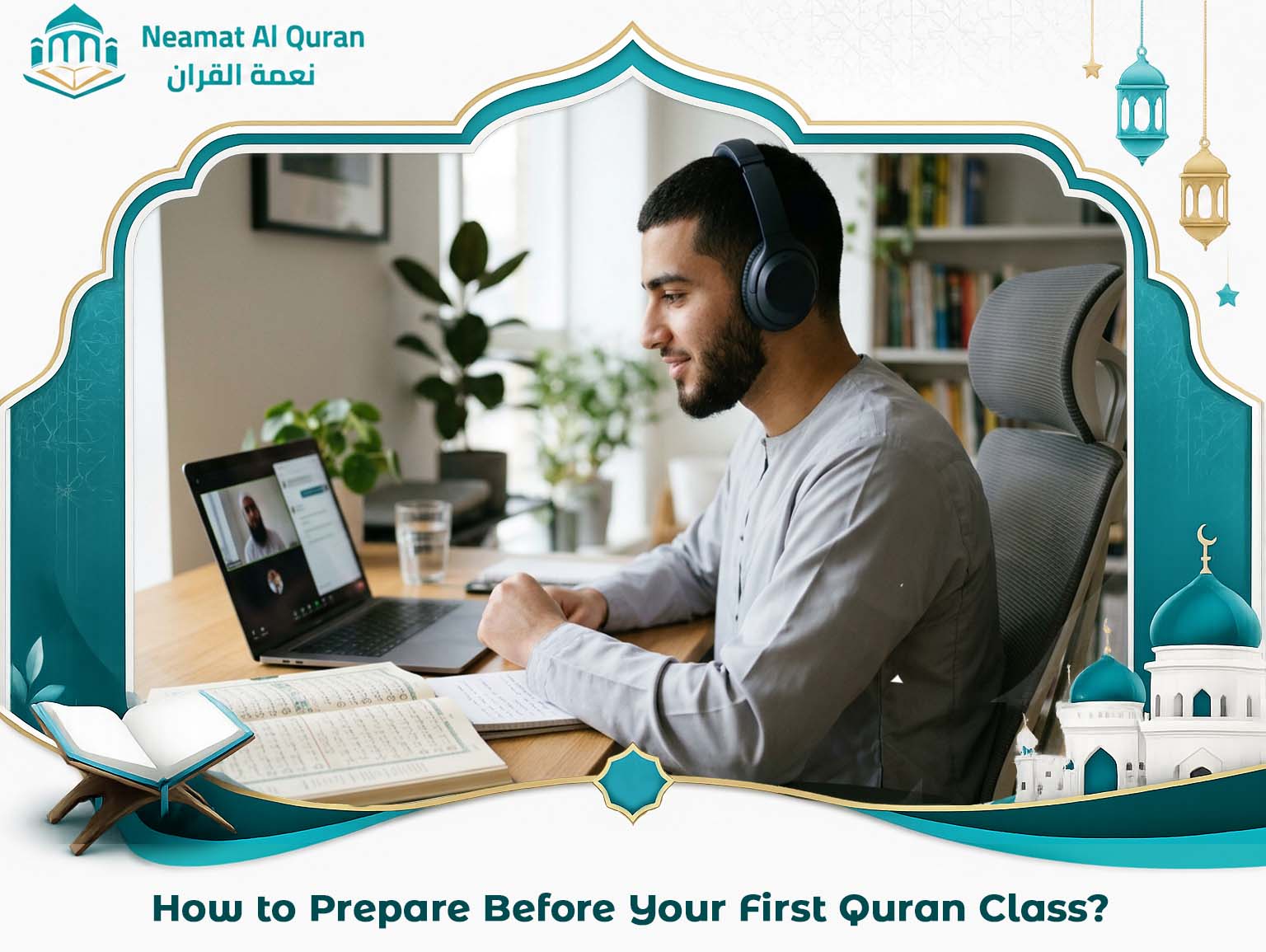
Knowing what to expect in your first quran class is helpful, but preparing a few things in advance can make the experience smoother.
You do not need complicated equipment or extensive preparation. A quiet environment and a clear idea of your goals are usually enough to get started.
Prepare Your Learning Space
Choose a comfortable place where you can listen carefully and repeat the teacher’s instructions without interruptions.
If your lesson takes place online, check your internet connection, microphone, speakers, and camera if required by the learning platform.
Keep Your Learning Materials Ready
Depending on your level, you may need to ask your teacher whether specific materials are needed before purchasing additional books.
- A Quran or digital Mushaf.
- A notebook for recording corrections.
- A pen or pencil.
- Beginner Arabic reading materials, if recommended.
- Headphones for clearer communication during online lessons.
Think About Your Learning Goals
Before the session, consider what you want to achieve. For example, you might want to read Arabic independently, correct your recitation, memorize selected Surahs, or understand the basic rules of Tajweed. Having a clear goal helps the teacher suggest a suitable learning approach.
Is It Normal to Make Mistakes During Your First Lesson?
Yes. Mistakes are a natural part of learning Quran recitation. You may confuse similar letters or struggle with pronunciation, but your teacher can correct these errors through explanation and practice.
Focus on accuracy rather than speed. Following an easy way to read quran can also help you develop your reading skills gradually.
What Questions Should You Ask Your Quran Teacher?
Use your first lesson to understand your learning path. Consider asking. These questions, which help you understand your learning goals and prepare for future lessons.
- What level should I start with?
- How will my progress be evaluated?
- What should I practice between lessons?
- How much revision do I need?
- Which materials should I use?
Choosing an Online Quran Learning Program
Online Quran classes offer a convenient way to learn from home. Before choosing a program, consider teacher qualifications, lesson structure, learning levels, scheduling, and progress assessment.
Neamat Al Quran Academy is an option to explore. Ask about its available courses, teaching methods, and class arrangements before enrolling.
Parents can also explore a quran memorization schedule for kids to understand how daily memorization targets and regular revision can support children’s progress.
Choose a learning environment where you feel comfortable asking questions, receiving corrections, and improving at your own pace.
How to Make Progress After Your First Quran Lesson
Your progress does not depend entirely on the time you spend with your teacher. Regular practice between lessons also plays an important role. Here are some practical habits to develop:
- Review previous lessons: Spend a few minutes revisiting the letters, words, or verses you studied.
- Listen carefully: Use reliable Quran recitations to become familiar with correct pronunciation.
- Repeat difficult sounds: Give extra attention to letters that you find challenging.
- Write down corrections: Keep a record of the mistakes your teacher identifies.
- Set realistic goals: Focus on small improvements instead of trying to learn everything at once.
For beginners, even a short daily practice session can help reinforce what they have learned. Avoid moving to difficult Quranic passages before developing confidence with the basic reading skills. Ask your teacher which exercises are suitable for your current level rather than trying to study everything independently.
What Should You Expect After Your First Quran Class?
After your first lesson, you should have a clearer understanding of your learning path. A useful introductory session should help you identify:
- Your current level: Whether you need to start with Arabic letters, basic reading, recitation, or Tajweed.
- Learning goals: The skills and pronunciation difficulties you need to improve.
- A practice plan: What to review and practice between lessons.
- Future lessons: How upcoming sessions will build on your current skills.
Remember that progress takes time. Focus on consistent practice rather than mastering everything in one lesson.
How to Know If Your First Quran Class Was Successful
A successful first lesson does not necessarily mean that you learned many new words or memorized several verses. Its value comes from helping you understand your starting point and giving you a clear direction. Consider these signs when evaluating your experience:
- You felt comfortable asking questions.
- The teacher understood your current reading ability.
- Instructions were explained in a way you could follow.
- You received helpful feedback about your pronunciation.
- You understood what to practice next.
- The learning pace was appropriate for your level.
If some instructions were unclear, ask for further explanation during the next session. Open communication can help you get more value from your lessons.
You can also discuss any concerns about the lesson structure or learning pace before deciding whether the program meets your expectations.
Frequently Asked Questions About What to Expect in Your First Quran Class
Find answers to common questions about your first Quran class, including lesson activities, preparation, beginner expectations, and how to make steady progress.
1. Should I take notes during my Quran lessons?
Yes. Writing down unfamiliar Arabic letters, pronunciation corrections, and Tajweed points can help you review important information between sessions.
2. Can I request a different learning pace if the lesson feels too fast?
You can discuss your preferred pace with your teacher. Explaining which parts are difficult to follow can help make the learning process more comfortable.
3. Is it better to use a printed Mushaf or a digital Quran?
Both can be useful for learning. A printed Mushaf may help some learners focus, while a digital Quran offers convenient access. Follow your teacher’s recommendation based on your learning needs.
Conclusion
Understanding what to expect in your first quran class can make starting your Quran learning journey less stressful. The first session is generally an opportunity to assess your current level, discuss your goals, meet your teacher, and identify the most suitable learning approach.
You do not need to be an experienced reader before beginning. What matters most is having a willingness to learn, accepting corrections, and maintaining a consistent practice routine.
If you are exploring online Quran education, you can contact Neamat Al Quran Academy to ask about its available learning programs, teaching methods, and class arrangements. Knowing what to expect in your first quran class can help you build confidence and develop your Quran reading skills step by step.