
Is online quran learning safe for kids is one of the most important questions parents ask before enrolling their children in virtual Quran classes. Online education can make Quran learning more accessible, flexible, and convenient, but parents naturally want to know whether the experience is secure, age-appropriate, and beneficial for their child.
The answer is yes, online Quran learning can be safe for kids when parents choose a trustworthy program and put appropriate safety measures in place. However, safety does not depend on the internet connection alone. It involves the teacher, learning platform, privacy settings, communication methods, home environment, lesson structure, and level of parental supervision.
For families considering Neamat Al Quran Academy, understanding these factors can make the decision easier. A good online Quran program should help children learn while also respecting their privacy, comfort, attention span, and individual needs.
This guide explains whether online quran learning is safe for kids from a practical parental perspective. It covers teacher selection, online privacy, screen use, home supervision, class design, potential risks, and ways to create a secure Quran learning environment.
What Makes Online Quran Learning Safe for Children?
When parents ask if online quran learning is safe for kids, they should look beyond the simple fact that lessons take place through a computer or tablet. Online safety is a combination of several protective practices that work together.
A secure Quran learning experience should provide:
- A qualified and trustworthy Quran teacher
- Clear communication between parents and the academy
- Appropriate online learning platforms
- Limited access to personal information
- A supervised learning environment
- Age-appropriate lessons
- Clear boundaries between teacher and student
- Regular parental awareness of the child’s progress
- Secure devices and updated software
- A predictable class schedule
Therefore, whether online quran learning is safe for kids depends heavily on how the program is organized. A poorly managed online class may create unnecessary risks, while a carefully structured program can provide a comfortable and controlled learning environment.
Parents should also remember that online education is not automatically safe simply because it is educational. The same digital safety principles that apply to other online activities should apply to Quran classes.
Discover the Wisdom of the Quran with Neamat Al Quran Academy
Are you ready to go beyond simple recitation and understand the true guidance of the Quran in your daily life? At Neamat Al Quran Academy, qualified teachers help students explore the meanings of the Quran clearly and practically, which strengthens their faith.
Through structured online lessons, learners improve their understanding and apply Quranic teachings in real situations. Each class encourages reflection, growth, and a deeper connection with Allah’s words. Start your journey today with Neamat Al Quran Academy and build a stronger relationship with the Quran.

Why Are Parents Concerned About Online Quran Classes?
The question is online quran learning is safe for kids often comes from legitimate concerns. Parents may wonder who teaches their child, what information the teacher can access, whether classes are recorded, and how communication takes place.
They may also worry about excessive screen exposure, distractions at home, technical problems, or inappropriate contact through digital platforms.
These concerns do not mean online Quran learning is unsuitable. Instead, they show why parents should evaluate an online program before registration.
A responsible academy should make its teaching process understandable to parents. Families should know how classes are scheduled, how teachers communicate, how progress is monitored, and what role parents are expected to play.
At Neamat Al Quran Academy, parents can use these criteria when evaluating whether an online Quran program meets their expectations for safe and structured children’s education.
How Do Online Quran Classes Work for Kids?
Online Quran classes generally use live video or audio sessions that connect a student with a teacher from home. Depending on the child’s level, lessons may include Quran reading, pronunciation practice, Tajweed, memorization, revision, or basic Islamic education.
The child usually sits in a quiet area with a device and joins the scheduled lesson. The teacher then guides the student through the planned material and provides corrections during the session.
This structure can make parents ask again: Is online quran learning safe for kids when a child interacts with a teacher through a screen?
The answer depends on the safeguards surrounding the interaction. Parents should know who the teacher is, how the class is conducted, and how communication is handled outside the lesson.
A well-organized class should also have a clear beginning and ending time. Children should not be expected to remain connected for unnecessary periods. This helps maintain both digital safety and healthy learning habits.
Choosing a Qualified and Trustworthy Quran Teacher
Teacher selection is one of the most important parts of determining if online quran learning is safe for kids. A child may spend significant time with the instructor, so parents should consider qualifications, teaching experience, communication style, and professional conduct.
A good teacher should understand that children require a different teaching approach from adults. Young learners often need encouragement, repetition, simple explanations, and frequent opportunities to participate.
Parents should look for a teacher who:
- Has appropriate Quran and Tajweed knowledge
- Understands children’s learning needs
- Communicates respectfully
- Maintains professional boundaries
- Gives constructive corrections
- Encourages rather than intimidates
- Follows the academy’s communication policies
- Provides parents with meaningful progress updates
At Neamat Al Quran Academy, the quality of the teacher should be considered alongside the curriculum and overall learning system. The goal is not simply to find someone who can recite the Quran, but someone who can teach children responsibly.
Protecting a Child’s Personal Information
Another important consideration when asking whether online Quran learning is safe for kids is digital privacy. Children should not need to provide unnecessary personal information to attend Quran lessons. Parents should carefully review registration forms and understand what information the academy collects.
Personal details that deserve protection include:
- Full home address
- School information
- Personal phone numbers
- Private family details
- Passwords
- Financial information
- Unnecessary photographs
- Private social media accounts
Parents should also avoid allowing children to share sensitive information during casual conversations with online teachers. A professional learning environment should keep the child’s educational information limited to what is genuinely necessary for providing the service.
Parents looking for structured Noorani Qaida online classes should also consider how the academy handles student information, communication, and online safety.
Should Parents Stay Nearby During Online Quran Classes?
Parental involvement can make a significant difference when evaluating whether online Quran learning is safe for kids. Young children may benefit from having a parent nearby during online lessons, particularly when they are new to virtual learning.
Parents do not necessarily need to sit directly beside the child throughout every minute. Instead, they can remain available and check the learning environment periodically.
For younger children, parents can:
- Help the child join the class.
- Confirm that the correct teacher is present.
- Stay within hearing distance when appropriate.
- Help resolve technical problems.
- Encourage the child to remain focused.
- Review homework after the session.
- Communicate concerns with the academy.
A structured Quran Qaida course for beginners can be easier for parents to monitor when lesson schedules, teachers, and communication channels are clearly organized.
As children become more independent, parental supervision can gradually become less direct. However, parents should remain aware of the child’s online learning routine.
Is One-on-One Quran Learning Safe for Children?
One-on-one instruction can be highly useful because the teacher can focus entirely on one child’s reading level and learning needs. However, parents may naturally ask whether online Quran learning is safe for kids when the class involves private interaction.
The important factor is not simply whether the lesson is one-on-one. Instead, parents should examine the academy’s policies and communication structure.
A responsible setup should establish clear professional boundaries. Parents should know when lessons take place, which platform is used, and how concerns can be reported.
A structured program that helps children learn the Arabic alphabet for Quran reading should also provide clear expectations for teacher-student communication and parental involvement.
It is also helpful when the academy provides a formal communication channel rather than expecting children to communicate privately with teachers through personal social media accounts.
For children, a structured one-on-one lesson can provide excellent educational value while still maintaining appropriate safeguards.
Using a Safe Learning Environment at Home
The home environment plays an important role in answering whether online Quran learning is safe for kids. Children should ideally attend their lessons from a shared or appropriate family space rather than an isolated location.
The area should be quiet enough for the child to hear the teacher clearly while still allowing parents to remain aware of the session. This can be particularly helpful for students taking a Quran reading course for non-Arabic speakers, as they may need additional attention during pronunciation practice.
A suitable learning space should have:
- Good lighting
- A stable internet connection
- A comfortable chair
- A suitable desk or table
- Minimal background noise
- The required Quran and learning materials
- A device positioned appropriately
For older students, including those attending online Arabic classes for adults, the learning environment can be more independent while still maintaining good privacy and security habits.
Creating a consistent learning area also helps children associate the space with concentration and respectful Quran study. For students who later want to expand their language skills through a Quranic Arabic course online, a dedicated and organized study space can support regular learning.
Similarly, students who require additional language support may benefit from a one-on-one Arabic tutor online, provided that communication remains professional and appropriately supervised.
Managing Screen Time During Quran Lessons
Screen time is another issue parents should consider when asking if online quran learning is safe for kids.
An online Quran lesson necessarily involves a screen, but that does not mean children need to spend excessive hours online. The objective should be to use technology for a specific educational purpose and then allow the child to return to offline activities.
Parents can balance online learning with:
- Outdoor play
- Physical activity
- Family interaction
- Reading printed books
- Schoolwork
- Rest
- Face-to-face social activities
The lesson length should also match the child’s age and ability to concentrate. A young learner may benefit more from a focused session than from an unnecessarily long class.
Internet and Device Safety for Children
When discussing whether online quran learning is safe for kids, parents should also consider basic cybersecurity.
The device used for Quran classes should have a secure password and an updated operating system. Parents should install software and applications from trusted sources and avoid allowing children to download unknown programs.
Useful precautions include:
- Keep the operating system updated
- Use strong passwords
- Enable appropriate parental controls
- Avoid sharing account credentials
- Install security updates promptly
- Use a trusted internet connection
- Review installed applications regularly
- Teach children not to click suspicious links
These simple steps can make the digital environment safer without making Quran learning complicated.
What Should Children Know About Online Safety?
Parents should not rely entirely on technology or teachers to protect children. Kids should also learn basic online safety rules.
When parents explain whether online quran learning is safe for kids, they can teach children several simple principles.
Children should understand that they should never:
- Share passwords
- Give out their home address
- Share private family information
- Send personal photographs without parental permission
- Open unfamiliar links
- Download unknown files
- Move conversations to private social media accounts
- Hide uncomfortable online interactions from parents
Most importantly, children should know that they can tell a parent immediately if something online makes them uncomfortable.
This creates a healthy safety culture rather than making children afraid of technology.
How Can Parents Evaluate an Online Quran Academy?
Before enrolling a child, parents should evaluate the academy carefully. Asking whether online quran learning is safe for kids should lead to practical questions rather than a simple yes-or-no decision.
Parents can ask:
- Who will teach my child?
- What qualifications do the teachers have?
- Which platform is used for lessons?
- How are teacher-student communications handled?
- Can parents contact the academy directly?
- How is student progress monitored?
- What happens if a child feels uncomfortable?
- Are lessons structured according to age and ability?
- How does the academy handle cancellations and technical problems?
- What information does the academy require during registration?
These questions help families understand whether the program is professionally managed.
For parents considering Neamat Al Quran Academy, the same evaluation process can help them determine whether the academy fits their child’s educational and family requirements.
Recognizing Professional Boundaries
Professional boundaries are essential when answering whether online quran learning is safe for kids. A Quran teacher should remain focused on teaching. Conversations should be relevant to the lesson and appropriate for the child’s age.
Parents should be cautious if an online instructor:
- Requests unnecessary personal information
- Encourages private communication outside approved channels
- Asks a child to hide conversations
- Requests inappropriate photographs
- Discusses unrelated private matters
- Attempts to bypass parental involvement
These behaviors should never be ignored. A professional academy should provide parents with a clear method for reporting concerns and should take children’s safety seriously.
Can Online Quran Learning Be Comfortable for Shy Children?
Some children feel uncomfortable speaking in front of a large classroom. Online one-on-one learning can sometimes reduce this pressure because the student receives direct attention without having to perform in front of many classmates.
This can influence the answer to whether online quran learning is safe for kids in another important way: emotional comfort matters as well as digital security.
A child should feel respected when making mistakes. Quran learning requires repeated practice, and children need encouragement to improve pronunciation and fluency.
A supportive teacher can make the child feel comfortable asking questions and trying again after a mistake. The goal should be to create a learning relationship based on respect, patience, and encouragement rather than fear.
Handling Distractions During Online Lessons
Home learning gives children convenience, but it can also introduce distractions. Toys, phones, television, siblings, pets, and household conversations may interrupt the lesson.
Parents can improve concentration by preparing the learning space before class.
Simple steps include:
- Turn off unnecessary notifications
- Keep toys away during the lesson
- Reduce background noise
- Prepare the Quran in advance
- Make sure the child has water nearby
- Ask siblings not to interrupt
- Start the lesson a few minutes early
These habits can improve the child’s educational experience and make the answer to ” Is online quran learning safe for kids more positive from both a safety and concentration perspective.
What Are the Main Risks of Online Quran Learning?
No online activity is completely free from risk. Parents should understand possible concerns without assuming that online Quran education is inherently dangerous.
Potential issues may include:
- Poor teacher selection
- Weak privacy practices
- Unsupervised communication
- Excessive screen time
- Inappropriate online behavior
- Distracting home environments
- Unstable internet connections
- Insecure devices
- Lack of parental awareness
The good news is that many of these concerns can be reduced through careful planning.
The question is online quran learning is safe for kids should therefore be approached through risk management. Parents can reduce unnecessary exposure by choosing a reputable program, supervising appropriately, and teaching children basic digital safety.
How Can Neamat Al Quran Academy Support a Structured Learning Experience?
Families searching for a children’s Quran program may want an approach that combines religious education with a clear learning structure. Neamat Al Quran Academy can be presented as the academy families consider when looking for organized online Quran education.
A structured program should take the child’s current level into account rather than treating every student the same. A beginner may need foundational reading skills, while another child may already be working on Tajweed or memorization.
This individualized approach is particularly important when considering whether online quran learning is safe for kids, because children learn best when lessons are appropriate for their age, ability, and attention span.
Parents should also remain involved in setting goals and reviewing progress. Online learning works best when the teacher, child, and parent understand their respective roles.
Creating a Safe Routine for Quran Study
A consistent routine can make online learning more predictable for children. Predictability can also help parents monitor the learning process.
A simple routine may look like this:
- Prepare the learning space before class.
- Check that the device and internet connection work.
- Join the lesson on time.
- Keep unnecessary applications closed.
- Participate actively in the lesson.
- Complete the assigned practice afterward.
- End the session when the scheduled lesson finishes.
- Discuss progress with the parent when appropriate.
Such a routine helps children understand that online Quran learning is a structured educational activity rather than unrestricted internet use.
For this reason, whether online quran learning is safe for kids is closely connected to the habits surrounding the lesson, not just the lesson itself.
How Parents Can Monitor Progress Without Creating Pressure?
Monitoring does not mean constantly correcting a child or demanding rapid progress. Children need encouragement and realistic expectations.
Parents can monitor progress by asking simple questions:
- What did you learn today?
- Which verses did you practice?
- Was anything difficult?
- Did you enjoy the lesson?
- Is there anything you want help with?
These conversations can reveal whether the child feels comfortable and engaged.
If a child suddenly becomes anxious about lessons, avoids attending classes, or seems unusually uncomfortable, parents should investigate calmly and communicate with the academy.
This type of open communication is an important part of determining whether online quran learning is safe for kids over the long term.
Online Quran Learning Compared With Traditional Classes
Traditional Quran education and online Quran education each have different characteristics. A traditional class allows children to learn physically alongside other students and can provide a strong sense of community.
Online learning, however, removes the need for travel and can provide greater flexibility. A child can attend a lesson from home, which may be especially helpful for families with demanding schedules or limited access to suitable local Quran teachers.
The key question is not whether one format is universally better. Instead, parents should consider which environment fits their child’s personality, learning needs, schedule, and family circumstances.
When parents ask if online quran learning is safe for kids, they should compare the actual safety and teaching practices of the programs available to them rather than judging online education solely by its format.
Signs That Your Child Is Having a Positive Online Learning Experience
Parents can look for practical signs that the program is working well. Positive indicators may include:
- The child attends lessons willingly.
- The child feels comfortable asking questions.
- Quran reading gradually improves.
- Pronunciation becomes more accurate.
- The child remembers previously learned material.
- The teacher communicates respectfully.
- Parents receive useful progress information.
- Lessons follow a clear structure.
These signs do not guarantee that every aspect of a program is perfect, but they provide useful evidence about the child’s experience.
They also help parents revisit the question is online quran learning is safe for kids based on their child’s actual learning environment rather than assumptions.
What Parents Should Do Before the First Class?
Preparation can make the first online Quran lesson easier and safer. Before the class begins, parents should:
- Meet or communicate with the academy according to its normal process.
- Understand the lesson schedule.
- Confirm the platform being used.
- Prepare the child’s device.
- Review basic online safety rules.
- Choose an appropriate learning location.
- Explain to the child how to report discomfort.
- Make sure the child knows not to share private information.
The first lesson is also a good opportunity to observe how the teacher interacts with the child.
Parents do not need to interfere with every part of the lesson. Instead, they can pay attention to the overall communication style and whether the child appears comfortable.
When Should Parents Reconsider an Online Quran Program?
Even after choosing a program, parents should continue evaluating the child’s experience. They may need to reconsider the arrangement if:
- The teacher repeatedly behaves unprofessionally.
- Communication policies are unclear.
- The child consistently feels uncomfortable.
- The academy does not respond appropriately to concerns.
- The lesson environment becomes stressful.
- The program does not suit the child’s learning level.
- Privacy expectations are not respected.
Asking whether online quran learning is safe for kids should be an ongoing consideration rather than something parents answer only during registration.
A child’s needs can change over time. Therefore, families should remain willing to adjust teachers, schedules, learning methods, or supervision when necessary.
Practical Safety Checklist for Parents
Before starting an online Quran program, parents should consider several practical safeguards. Asking whether online quran learning is safe for kids is easier to answer when families have a clear checklist for evaluating the learning environment.
Parents should:
- Choose a recognized and transparent academy.
- Ask about teacher qualifications and experience.
- Understand how online classes are conducted.
- Use secure devices and protected accounts.
- Avoid sharing unnecessary personal information.
- Keep teacher communication within approved channels.
- Create a quiet and appropriate learning space.
- Set reasonable screen-time boundaries.
- Teach children basic internet safety.
- Stay involved in the child’s learning progress.
- Encourage children to report anything that makes them uncomfortable.
- Review the program regularly as the child’s needs change.
These precautions can make parents more confident when considering whether online quran learning is safe for kids. They also help create a structured environment where children can focus on Quran study without unnecessary digital risks.
For families researching whether online quran learning is safe for kids, teacher verification should be one of the first steps. Parents deserve to know who is teaching their child and how the academy manages communication.
Another important consideration is privacy. When parents ask Is online quran learning safe for kids, they should check what personal information the academy collects and how that information is handled.
Finally, parents should remember that online safety is an ongoing process. Regular communication with the child can reveal whether the learning experience remains comfortable, respectful, and appropriate.
Is Online Quran Learning Safe for Kids? Why the Parent’s Role Still Matters
Parents play an essential role in creating a safe, supportive, and productive online Quran learning environment. Although technology allows children to study with qualified Quran teachers from home, parental involvement provides an important layer of guidance and accountability. Therefore, when asking if online quran learning is safe for kids, parents should look beyond the teacher and consider the entire learning environment.
Parents can help by knowing the lesson schedule, understanding how online communication works, and checking whether their child feels comfortable during classes. Children should also know that they can speak openly with their parents if something makes them uncomfortable or confused.
However, supervision does not mean interrupting every lesson. Parents can provide reasonable oversight while allowing children to develop confidence and independence. They should also pay attention to changes in behavior, such as unusual anxiety, reluctance to attend classes, or unwillingness to discuss lessons.
For families considering Neamat Al Quran Academy, maintaining clear communication between parents, teachers, and children can contribute to a more positive learning experience. Ultimately, answering whether online quran learning is safe for kids requires cooperation, appropriate supervision, and open communication.
How to Make Online Quran Learning More Engaging?
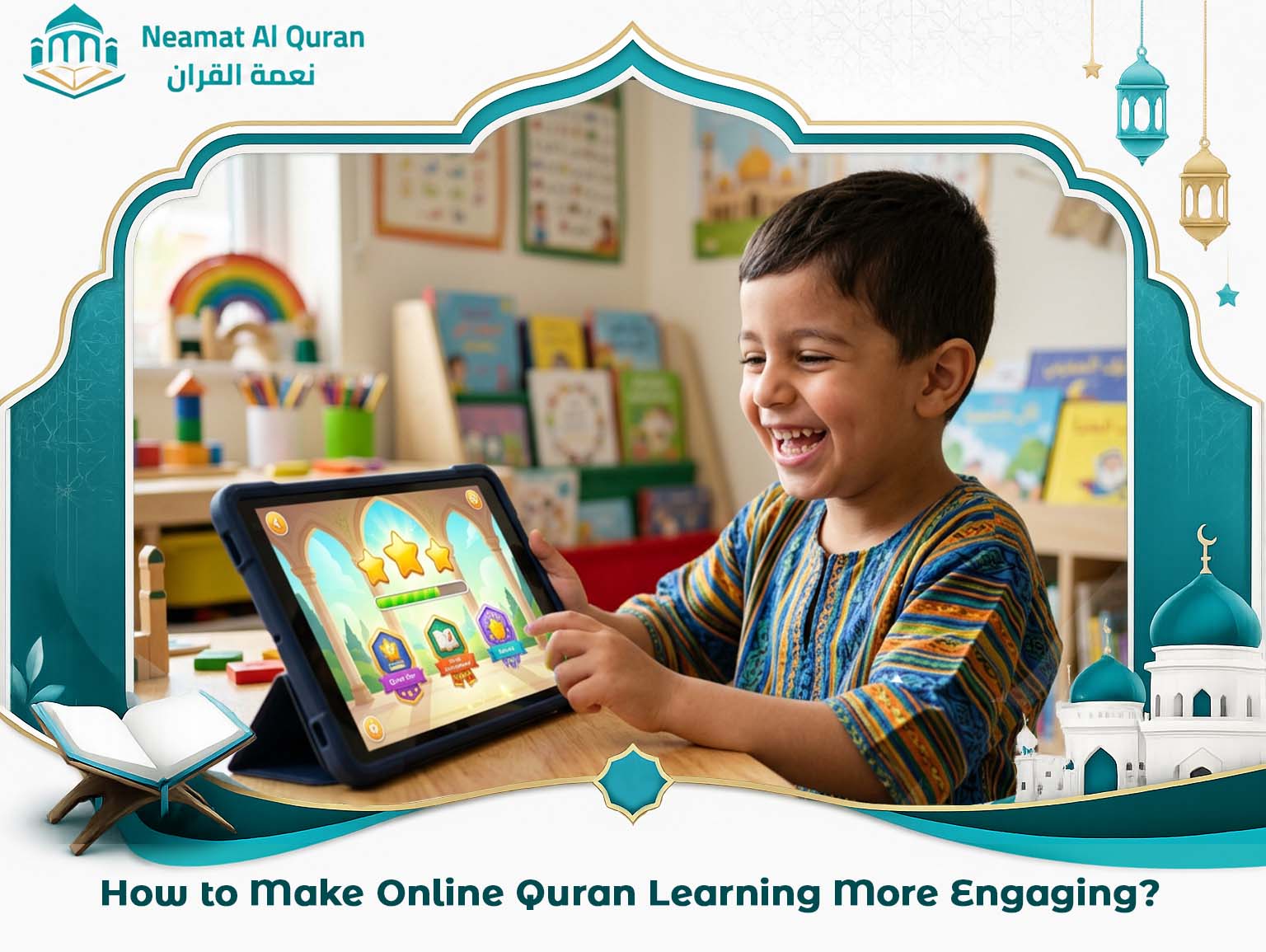
Safety and engagement should work together. A child who feels bored or overwhelmed may lose concentration, while a child who enjoys learning is more likely to participate actively.
When parents consider whether online quran learning is safe for kids, they should also ask whether the lessons are suitable for the child’s age and attention span. A safe class should not only protect the child digitally; it should also provide a comfortable educational experience.
Teachers can make lessons more engaging by using:
- Short reading activities
- Repetition and revision
- Interactive questions
- Age-appropriate examples
- Clear learning goals
- Positive feedback
- Simple progress milestones
- Gradual progression
- Encouraging correction
- Short practice exercises
These methods help children stay focused without feeling pressured. Parents can encourage progress, while reasonable lesson times help maintain healthy screen habits.
A consistent and engaging routine can also improve participation and confidence. For Neamat Al Quran Academy, parents should consider whether the teaching approach suits their child’s age, personality, and Quran level.
Ultimately, whether online quran learning is safe for kids depends on more than digital security. Qualified teaching, emotional comfort, parental involvement, and a positive learning environment all contribute to a safer experience.
Frequently Asked Questions
Provide clear answers to parents’ most important concerns about safety, privacy, and online Quran classes.
Can parents request to observe an online Quran lesson?
Parents can ask the academy about its observation policy before enrollment. Knowing whether parents can observe or review part of a lesson can help families decide whether the program provides the level of transparency they expect.
What should a child do if an online teacher makes them uncomfortable?
The child should tell a parent or another trusted adult immediately. Parents should listen calmly, avoid blaming the child, document the concern when appropriate, and contact the academy through its official communication channel.
Is it safe for children to use headphones during Quran classes?
Headphones can be convenient, but parents should keep the volume at a comfortable level and avoid prolonged loud audio. For younger children, speakers may sometimes be preferable because they allow parents to remain aware of the lesson environment.
Should a child use a personal device or a family device for Quran classes?
Both options can work. A family-managed device may give parents greater control over applications, permissions, passwords, and security settings. Whatever device is selected should be updated, protected, and configured appropriately for the child’s age.
In conclusion, if you are still asking if online quran learning is safe for kids, the answer depends on the quality of the program and the safeguards surrounding the child. Parents should evaluate the teacher, communication policies, privacy practices, device security, lesson structure, and level of supervision before making a decision.
When these areas are handled responsibly, online Quran learning can provide children with a convenient and supportive way to study the Quran from home. Neamat Al Quran Academy can be evaluated using these same standards so parents can make an informed choice based on their child’s needs.
Most importantly, whether online quran learning is safe for kids should remain an ongoing question rather than a one-time decision. As children grow and their online habits change, parents should continue reviewing the learning environment and communicating openly with them.
A thoughtful combination of qualified teaching, appropriate supervision, secure technology, and child-friendly lessons can make online Quran education a positive experience for the whole family.