
Short surahs to learn are an excellent starting point for Muslims of all ages who want to build a strong connection with the Quran. For beginners, starting with shorter chapters makes learning easier, more enjoyable, and less overwhelming. These chapters are especially helpful for children, new Muslims, and anyone who wants to improve their Quran recitation gradually.
Choosing the right short surahs allows beginners to build confidence, practice correct pronunciation, and become familiar with frequently recited verses. Many of these chapters are part of daily prayers, making them practical starting points for anyone developing a regular Quran learning routine.
Why Should Beginners Start with Short Surahs?
Starting with shorter Quran chapters offers several benefits. Beginners can focus on pronunciation, memorization, and understanding without feeling pressured to learn lengthy passages immediately.
Here are some important reasons to begin with shorter surahs:
- Easier memorization: Short chapters usually contain fewer verses, making them more manageable for beginners.
- Improved recitation: Learners can repeat each verse and focus on pronunciation and Tajweed rules.
- Greater confidence: Completing a short surah gives learners a sense of achievement and encourages them to continue.
- Practical use in Salah: Many short chapters are commonly recited during daily prayers.
- Gradual progress: Beginners can develop consistent learning habits before moving to longer chapters.
For parents in the United States, the United Kingdom, and Canada, introducing children to short surahs can also be a simple way to include Quran learning in their daily routines.
10 Short Surahs to Learn for Beginners
There are several accessible chapters in the Quran that beginners can start with. The following selection includes familiar surahs that are relatively short and useful for building basic recitation and memorization skills.
1. Surah Al-Ikhlas
Surah Al-Ikhlas is one of the best chapters for beginners. It contains only four verses and explains the Oneness of Allah.
Its short length makes it suitable for children and new Muslims. Learners can practice reading each verse slowly while paying attention to the correct pronunciation of Arabic letters.
2. Surah Al-Falaq
Surah Al-Falaq consists of five verses. It teaches Muslims to seek Allah’s protection from different forms of harm.
Its simple structure makes it a helpful choice for beginners who want to improve their memorization skills. Repeating the verses regularly can also help learners become more comfortable with Quranic Arabic.
3. Surah An-Nas
Surah An-Nas contains six verses and focuses on seeking Allah’s protection from the whispers of Satan.
It is often taught alongside Surah Al-Falaq because both chapters are commonly recited for protection. Learning them together gives beginners an achievable memorization goal.
4. Surah Al-Kawthar
Surah Al-Kawthar is the shortest chapter in the Quran, containing only three verses.
Its limited number of verses makes it an excellent starting point for young children and adults who have little experience with Quran memorization.
5. Surah Al-Asr
Surah Al-Asr has three verses that highlight the importance of faith, good deeds, truth, and patience.
Although it is short, it carries an important message about how Muslims should use their time and live their lives.
6. Surah Al-Nasr
Surah Al-Nasr consists of three verses. It describes Allah’s support and the importance of glorifying and praising Him.
Beginners can memorize this chapter in small sections and gradually connect the verses.
7. Surah Al-Masad
Surah Al-Masad contains five verses. It discusses the consequences of opposing the message of Islam.
Its short length makes it another option for learners who are developing their memorization abilities.
8. Surah Quraysh
Surah Quraysh consists of four verses. It reminds people of Allah’s blessings and His protection.
Learning this chapter also gives beginners an opportunity to understand how Quranic verses communicate important lessons through concise language.
9. Surah Al-Fil
Surah Al-Fil contains five verses and describes the event of the People of the Elephant.
Its narrative makes it particularly interesting for children. Parents can explain the general meaning of the chapter before helping their children memorize it.
10. Surah Al-Ma’un
Surah Al-Ma’un consists of seven verses. It highlights the importance of sincere worship, kindness, and helping those in need.
It is a useful chapter for teaching children that Islamic learning includes good behavior and concern for others.
How to Memorize Short Surahs Easily?
Finding suitable short surahs to learn is only the beginning. Developing a consistent memorization routine is equally important.
The following techniques can help beginners make steady progress:
1. Start with a small goal.
Choose one short surah rather than trying to memorize several chapters at once. Focus on completing it correctly before moving forward.
2. Listen to a reliable Quran reciter.
Listening to accurate recitation helps learners become familiar with pronunciation, rhythm, and the correct articulation of Arabic letters.
3. Repeat each verse.
Read or listen to one verse several times before moving to the next. Once you feel comfortable, connect the verses and recite the complete surah.
4. Understand the meaning.
Knowing what a surah means can make memorization more meaningful. Beginners should learn simple explanations of the verses instead of focusing only on remembering the Arabic words.
5. Review regularly
Set aside a few minutes every day to revise previously memorized chapters. Regular revision helps prevent forgetting and strengthens long-term retention.
For additional techniques, explore this guide on how to memorize Quran easily.
How Can Parents Help Children Learn Short Surahs?
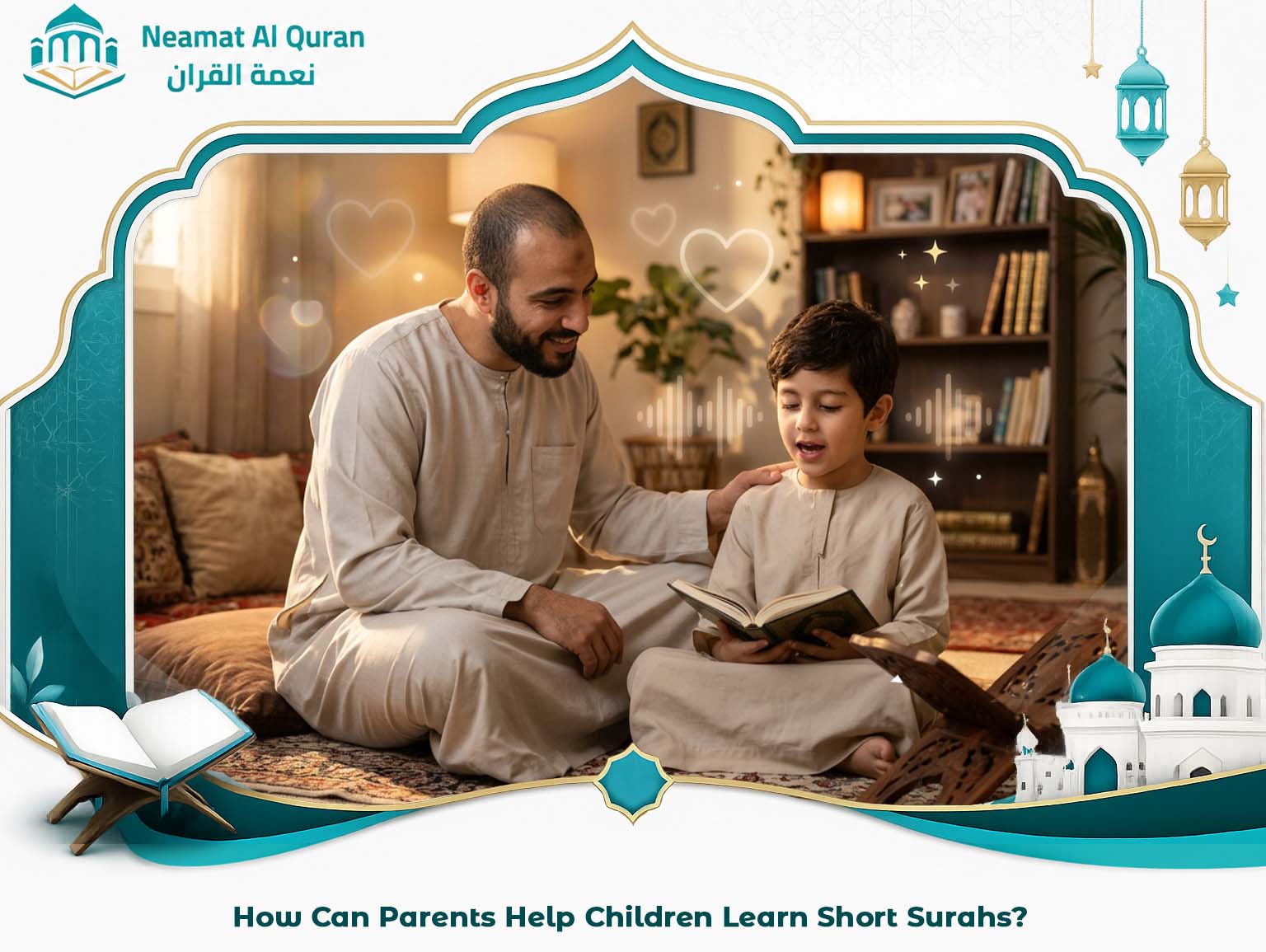
Parents play an important role in introducing children to Quran learning. Rather than making memorization feel like a school assignment, they can create a positive environment where children enjoy listening, repeating, and understanding Quranic verses.
Consider these practical ideas:
- Set a consistent time for Quran practice.
- Use short and age-appropriate lessons.
- Encourage children to listen to recitation before memorizing.
- Celebrate small achievements without putting pressure on them.
- Explain the meanings through simple examples and stories.
- Revise previously learned chapters together.
Parents should also remember that children learn at different speeds. Some may memorize quickly, while others need more repetition and encouragement.
Learning with Neamat Al Quran Academy
For learners who need structured guidance, Neamat Al Quran Academy provides an option to explore online Quran education. Learning with a qualified teacher can help beginners develop proper pronunciation, improve recitation, and follow a more organized memorization plan.
Students who want to progress beyond basic chapters can explore the intensive Hifz course to learn more about structured Quran memorization.
Choosing a suitable teacher is also important, especially for children and beginners who need regular correction and encouragement. This guide explains how to find a reliable Quran tutor online.
Neamat Al Quran Academy can be considered by families looking for online Quran learning opportunities with flexible study arrangements. Students interested in understanding the long-term value of memorization can also read about the benefits of being a hafiz.
Online lessons may also make Quran education more accessible to families in Australia, New Zealand, and Ireland, particularly when local schedules or travel make in-person classes difficult.
Can You Learn Quran Online?
Yes. Online Quran lessons allow beginners to study from home while receiving guidance from a teacher. This approach can be especially helpful for people balancing work, school, and family responsibilities.
Neamat Al Quran Academy offers an opportunity to explore online learning options. Those interested in different teaching methods can learn more about learn quran via Skype.
The most important consideration is choosing a learning arrangement that provides clear instruction, regular practice, and appropriate feedback.
Frequently Asked Questions About short surahs to learn
Frequently Asked Questions About Short Surahs to Learn cover the easiest Quran chapters for beginners, memorization tips, and guidance for children who want to improve their recitation.
1. What is the easiest surah to memorize for beginners?
Surah Al-Kawthar is a great choice among short surahs to learn because it contains only three verses. Surah Al-Ikhlas is another excellent option for beginners.
2. Which surahs should children learn first?
Children can begin with Surah Al-Ikhlas, Al-Falaq, An-Nas, and Al-Kawthar. These short surahs to learn are commonly taught to young Muslim learners and help them build confidence in Quran memorization.
3. How many short surahs should I memorize in a week?
There is no fixed number. Your progress depends on your available time, reading ability, and memorization skills. Learning one or two chapters correctly may be more beneficial than memorizing several without proper revision.
4. Should I learn Tajweed before memorizing short surahs?
It is helpful to learn basic Tajweed rules from the beginning. A qualified teacher can correct pronunciation and explain the rules gradually while you memorize new chapters.
conclusion
Beginning with short surahs to learn makes Quran memorization more manageable and encourages consistent practice. Whether you are an adult beginner, a new Muslim, or a parent teaching your child, these chapters can help establish a strong foundation for future Quran study.
Take your time, listen to accurate recitation, understand the meanings, and review regularly. Choosing appropriate short surahs to learn and following a consistent routine can gradually improve your reading, memorization, and connection with the Quran. With patience and proper guidance, every learner can make meaningful progress.